Shortly after the 2026 Chinese Spring Festival, a raw material inflation storm triggered by Middle Eastern crude oil volatility swept across China’s entire kitchen appliance and kitchenware supply chain, sparking a new round of price hikes for range hoods, gas stoves, disinfection cabinets and conventional metal-plastic kitchen supplies. Copper prices have surged over 25% from recent lows, while aluminum prices hit record highs before partial corrections, sustaining elevated operational costs for manufacturers. Meanwhile, petrochemical-derived auxiliary materials including ABS plastic, sealing insulation parts and packaging materials rose by 10% to 30% in tandem with crude oil fluctuations, delivering a dual blow of metal and petrochemical cost inflation to kitchen product factories.
Against the backdrop of sluggish real estate sales and weak household renovation demand, traditional kitchen manufacturers face a vicious dilemma: raising end-user prices will slash market demand by 20%–30%, while holding retail prices means absorbing soaring upstream costs and eroding gross profits. Small and medium kitchenware enterprises bear the brunt, lacking large-scale long-term raw material procurement contracts to hedge price volatility, trapped in the “cost explosion yet unmarketable price increase” paradox. Many factories attempted to cut internal configurations without lowering selling prices, only to trigger quality degradation, shrinking market share and even safety accidents, forming an unsustainable negative cycle.
This industry-wide cost crisis is not merely a short-term price fluctuation; it marks the start of a brutal market reshuffle, pushing kitchen brands to reconstruct competitiveness across supply chains, product structures, technology and operation models. While traditional metal and plastic kitchen products struggle with cost volatility, silicone kitchenware stands out as a high-potential segmented track, buffered by relatively stable upstream supply, food-safe material attributes and flexible material substitution value. This article analyzes the structural challenges of the broader kitchen industry amid raw material inflation, then elaborates the long-term growth logic and core trends of silicone kitchenware as a transformative alternative material.
1. Systematic Cost Pain Points of Traditional Kitchen Product Supply Chains
The kitchen industry’s vulnerability to commodity price swings stems from its heavy reliance on two high-volatility upstream categories: non-ferrous metals and petrochemical plastics.
First, metal-based kitchen appliances and stainless steel utensils rely heavily on copper and aluminum core components. Copper wiring, heating modules and aluminum alloy shells account for a large proportion of product production costs. Without long-term locked supply contracts, small manufacturers face passive cost shocks every time metal futures rally. Unlike top-tier brands with nationwide bulk procurement capacity, small-batch factories cannot dilute raw material risks through scale, compressing gross margins to single digits.
Second, nearly all plastic structural parts, rubber sealing gaskets and outer packaging for kitchen goods originate from crude oil refining. As an industrial foundational material, crude oil price swings directly pass through to every plastic accessory of kitchen products. In 2026’s Middle East oil crisis, plastic auxiliary material costs climbed 10%–30% within months, compounding pressure on manufacturers already strained by metal inflation. Worse, traditional plastic kitchenware carries dual hidden risks: volatile petrochemical costs and growing consumer wariness of BPA, plasticizer and chemical migration under high cooking temperatures.
Consumption-side factors amplify operational risks further. Kitchen products are durable consumer goods with high price sensitivity; statistics show a mere 5% factory price increase can drive over 20% retail price growth and a concurrent 20%–30% drop in purchasing volume. With the real estate downturn suppressing new kitchen renovation demand, price hikes become a high-risk strategy most brands dare not implement. Material downgrade is equally risky, as compromised quality damages brand reputation and triggers after-sales crises. Faced with this deadlock, industry analysts outlined six systematic transformation strategies for kitchen enterprises to achieve cost stabilization, quality improvement and profit growth: optimizing supply chain vertical integration, upgrading product mix toward high-end lines, boosting technological innovation premium, implementing tiered precise pricing, streamlining multi-level distribution channels, and shifting business models from single product sales to full-scene kitchen solution services.
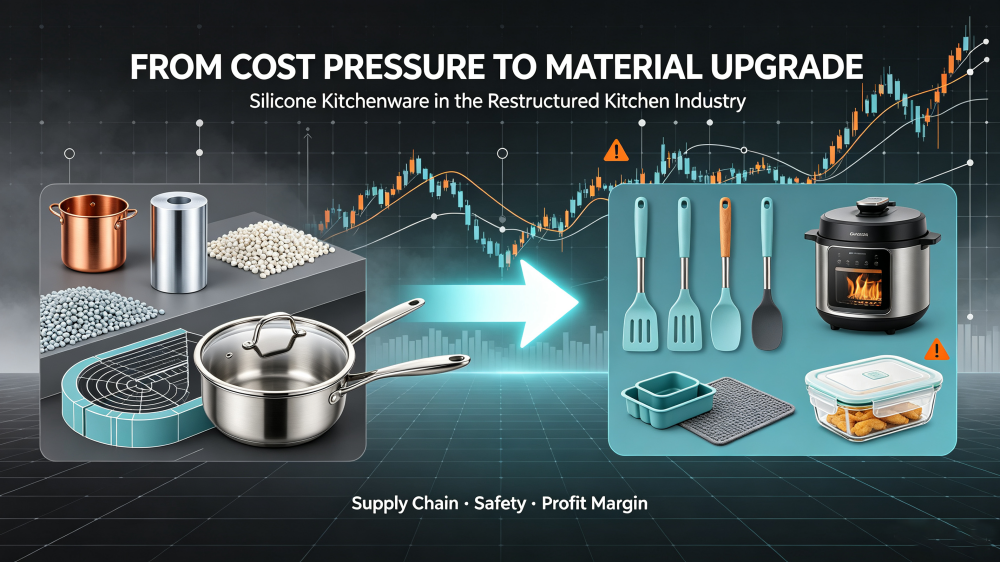
Central to all six strategies is material structure optimization: replacing high-cost, volatile raw materials with stable, low-fluctuation alternative substrates to absorb inflation pressure without sacrificing product quality. This material substitution demand creates unprecedented market space for silicone kitchenware.
2. Silicone Kitchenware: Natural Advantages Against The Industry’s Raw Material Crisis
Silicone, also known as food-grade organosilicon rubber, differs fundamentally from traditional metal and plastic kitchen materials in its upstream supply logic and cost stability, making it a core substitution solution amid the 2026 kitchen industry reshuffle.
2.1 More Resilient Raw Material Supply Chain
Unlike petrochemical plastics fully dependent on crude oil, silicone’s core raw material silicon ore boasts globally abundant reserves concentrated in China, the U.S., Russia and Brazil, decoupling its pricing from extreme oil market shocks. While silicone monomers (DMC) also involve partial petrochemical inputs, domestic leading silicon material manufacturers including Hesheng Silicon Industry and Dongyue Group have expanded large-scale production capacity since 2024, stabilizing domestic food-grade silicone resin prices and mitigating drastic short-term spikes seen in ABS plastic and non-ferrous metals.
Silicone manufacturers can sign multi-year long-term supply contracts with silicon ore and monomer suppliers, building cost safety cushions unavailable to plastic and metal kitchen factories. Industry data shows silicone raw material price volatility ranges only 15%–25% over five years, far milder than copper and aluminum’s 25%+ single-cycle surge recorded in early 2026. For kitchen brands seeking material substitution, silicone effectively diversifies upstream commodity risks, reducing reliance on two hyper-volatile material categories (metals and crude plastics).
2.2 Food Safety Premium Drives Consumer Endogenous Demand
Beyond supply chain stability, rising health consciousness among Chinese households becomes a permanent growth driver for silicone kitchenware. National food contact material standard GB 4806.16-2025 imposes stricter limits on harmful substance migration for cookware, eliminating low-grade plastic and uncoated metal products with chemical leaching risks at high temperatures.
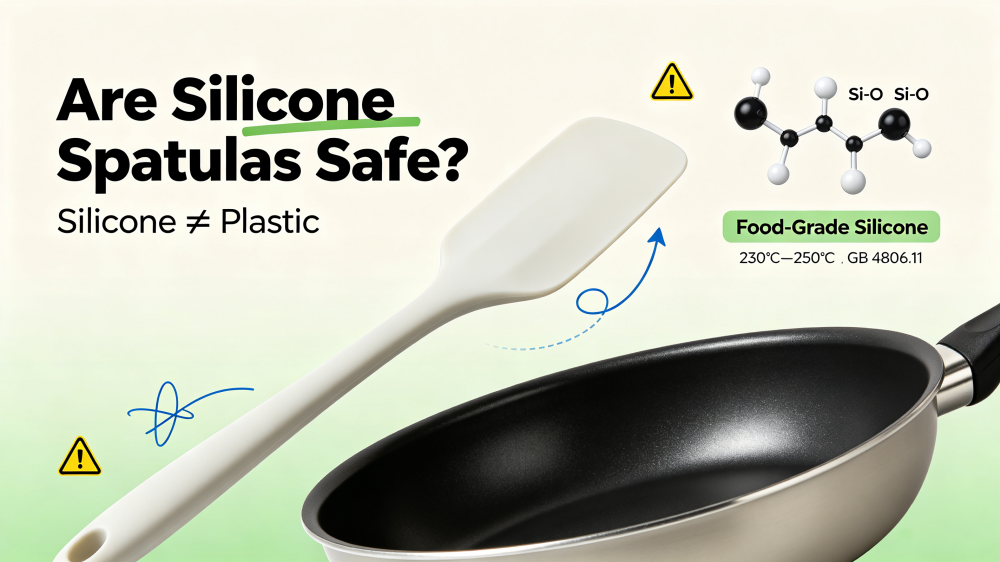
Food-grade platinum-cured silicone withstands temperatures ranging from -60°C to 260°C, releasing no BPA, phthalates or toxic volatiles during baking, stir-frying or steaming. Silicone utensils (spatulas, whisks, baking mats, air fryer liners, baby food molds) avoid scratching non-stick pan coatings, solving a universal household pain point of stainless steel cookware. Subdivided maternal and infant silicone kitchenware has formed a 11.5 billion RMB market in 2026, a fast-growing niche with high consumer willingness to pay premium prices for safety.
Against the industry trend of “moving away from low-price internal competition toward value competition,” silicone kitchenware naturally carries health and safety value propositions that justify moderate price adjustments without triggering sharp demand declines—an advantage traditional plastic and metal kitchen products lack.
2.3 High Gross Margin Helps Manufacturers Offset Inflation Pressure
Generic plastic kitchenware delivers gross margins below 15%, while entry-level stainless steel utensils average 18%–22%. In contrast, functional food-grade silicone kitchenware achieves gross margins of 30%–50%, sufficient to absorb mild upstream raw material cost hikes without large-scale retail price increases. Brands can upgrade product value through silicone material replacement, converting raw material inflation into a “healthy material upgrade” selling point for consumers, avoiding the customer churn caused by blunt price hikes of metal and plastic goods.
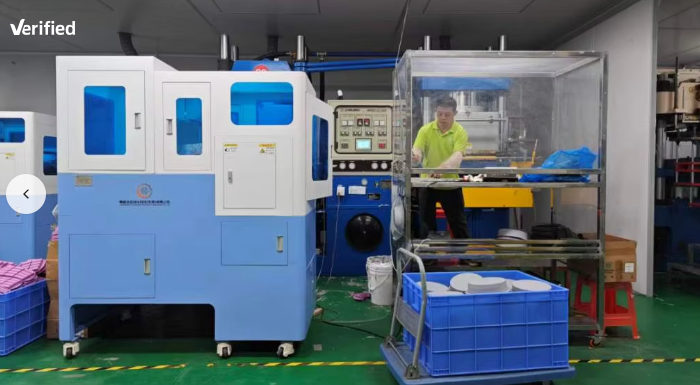
Moreover, silicone supports lightweight, integrated modular design. Manufacturers adopt flexible small-batch automated molding production to cut inventory backlogs, aligning with the industry’s transformation direction of flexible manufacturing and full-scene kitchen solution sales. Kitchen brands can bundle silicone baking tools, food storage lids and air fryer silicone liners with core range hood and stove products to lift overall customer unit price, implementing the sixth core transformation strategy of “selling kitchen scene services rather than single appliances” proposed by industry insiders.
3. Core Long-Term Trends of Silicone Kitchenware Amid Kitchen Industry Restructuring
The 2026 raw material inflation wave accelerates the kitchen industry’s three major structural shifts: phasing out low-end price competition, shifting from single-item sales to integrated kitchen solutions, and replacing high-volatility raw materials with stable, sustainable substrates. Within this context, silicone kitchenware evolves three definitive development trends over the next 3–5 years.
3.1 Product High-End & Functional Specialization
Basic silicone spatulas and baking mats will gradually lose price competitiveness, while differentiated functional silicone products capture market share. Antibacterial coated silicone, temperature-sensing smart silicone accessories, multi-scene foldable silicone storage tools and carbon-neutral bio-based silicone cookware become mainstream premium lines. Compliance standards tighten simultaneously: GB 4806.16-2025 raises detection thresholds for food-grade silicone, eliminating small manufacturers producing uncertified low-quality silicone goods, lifting industry concentration. The CR5 market share of China’s silicone kitchenware sector is projected to rise from 38% in 2025 to 52% by late 2026, mirroring the consolidation trend sweeping the broader kitchen appliance industry.
3.2 Deep Integration With Integrated & Smart Kitchen Ecosystems
As mainstream kitchen appliance brands push embedded integrated stoves, steam ovens and air fryers, customized silicone supporting parts become essential matching accessories. Silicone air fryer liners, steam oven silicone baking trays and integrated kitchen sealing silicone components form a high-growth supporting market, closely linking silicone kitchenware to the core high-margin kitchen appliance track. Brands that combine main kitchen appliances with matching silicone utensil sets deliver complete one-stop kitchen solutions, boosting customer stickiness and average order value, perfectly executing the channel and operation innovation strategies outlined for surviving kitchen manufacturers.
3.3 Dual-Drive of Domestic Consumption Upgrade & Steady Export Growth
China’s domestic silicone kitchenware market scale will reach 142.3 billion RMB in 2026, maintaining an 11.4% annual growth rate, with third- and fourth-tier cities contributing 41.2% of new incremental demand as household kitchen renovation standards improve. Externally, global demand for non-toxic sustainable cookware expands steadily; the global silicone cookware market registers a 7.2% CAGR from 2026 to 2033, with Chinese silicone manufacturers dominating global supply chains due to complete industrial clusters in Foshan, Dongguan and Yiwu. RCEP trade policies reduce export tariffs, supporting continuous overseas order growth for food-grade silicone kitchen products, creating dual revenue buffers for silicone brands when domestic real estate-linked kitchen demand weakens.
4. Conclusion: Silicone Kitchenware As A Cyclical Resilient Track For Industry Transformation
The 2026 raw material inflation crisis is not a temporary market shock but a watershed moment for the kitchen industry’s supply-side clearing and industrial upgrading. Traditional kitchen product manufacturers reliant on cheap copper, aluminum and crude plastic materials face inevitable elimination if they only passively absorb cost hikes or downgrade product quality. The six-dimensional transformation framework (supply chain, product mix, technology, pricing, channel, operation) proposed by industry experts all converge on one core path: material innovation and substitution to stabilize costs and elevate product value.
Silicone kitchenware stands out as the most viable substitution material solution, balancing relatively stable upstream supply, food safety consumer value, high profit margins and seamless compatibility with the emerging integrated smart kitchen ecosystem. While short-term silicone monomer price fluctuations and stricter food safety compliance standards bring operational challenges to small silicone factories, the long-term growth trajectory remains unambiguous.
Moving forward, the entire kitchen industry will bid farewell to crude material low-price competition and enter an era of material value competition. Enterprises that deploy food-grade silicone product lines, optimize silicone supply chain cooperation and develop multi-scene functional silicone kitchen sets will effectively hedge raw material inflation risks, capture consumption upgrade dividends, and successfully cross the industry reshuffle cycle alongside top kitchen appliance brands.