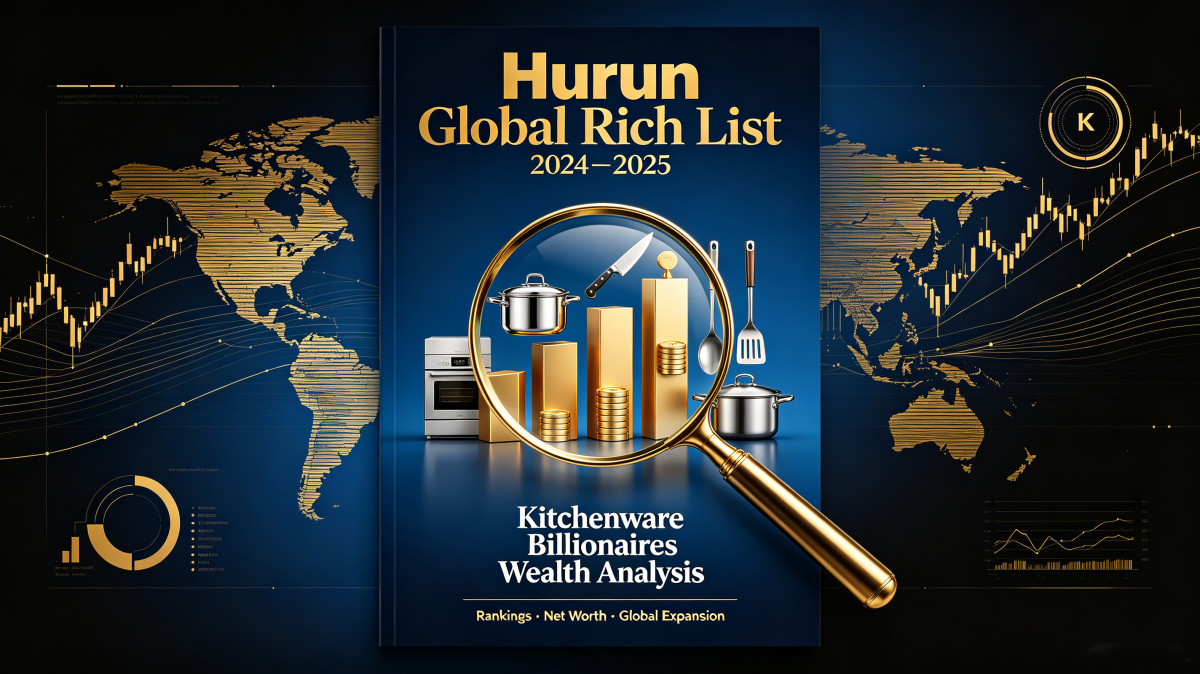
The kitchenware and kitchen‑appliance industry represents one of the world’s most stable consumer‑goods sectors. Driven by residential renovation booms, rising demand for premium home‑cooking equipment, smart‑kitchen innovation and cross‑border brand expansion, enterprise founders in this segment have seen dramatic shifts in their personal wealth over recent years. Released every spring, the Hurun Global Rich List provides a valuable snapshot of billionaire net‑worth calculated on a fixed cut‑off date each year, reflecting stock‑market sentiment, domestic consumption trends and international business performance.
By comparing data from the 2024 and 2025 rankings, industry observers can identify which kitchen‑sector entrepreneurs are gaining momentum, which are facing valuation pressure, and how corporate development strategies correlate with wealth growth. This report examines leading kitchen‑industry billionaires, traces their ranking movement and asset fluctuations, introduces core business operations, dissects corporate long‑term strategies, evaluates international brand awareness, and concludes with market‑wide observations for the global kitchen‑goods industry.
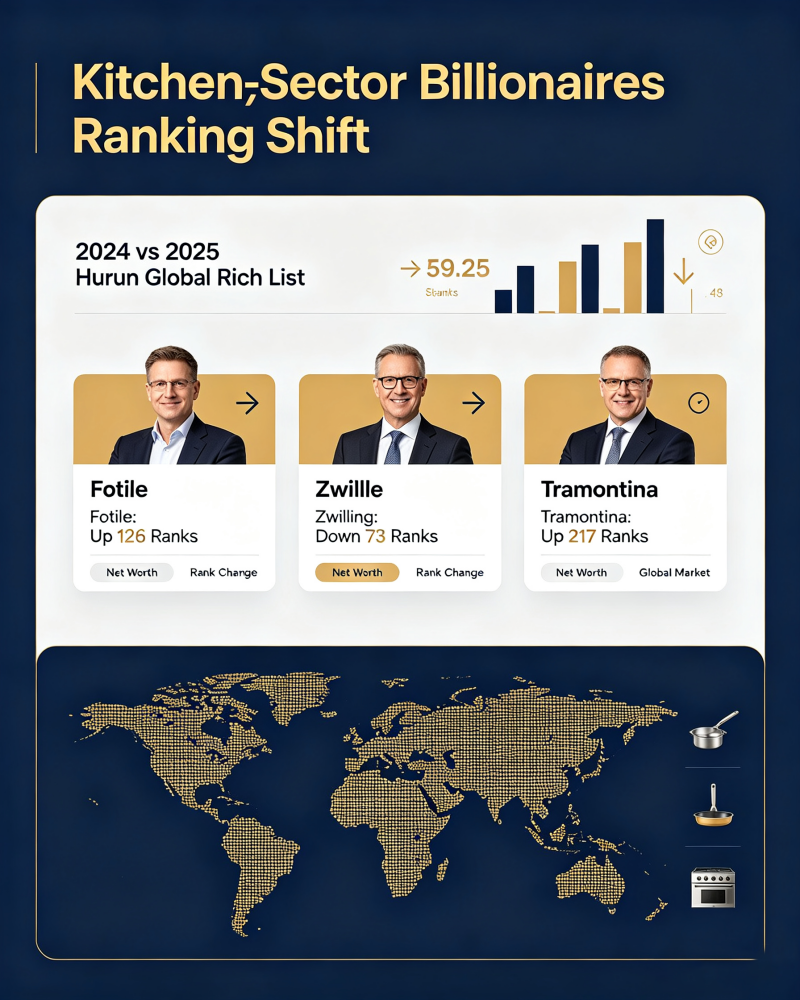
Overview of Kitchen‑Sector Billionaires on Hurun Global Rich List 2024‑2025
Compared with technology, real‑estate and pharmaceutical sectors, pure kitchenware manufacturing produces relatively fewer global billionaires. Most wealthy kitchen‑industry entrepreneurs originate from East Asia, Western Europe and South America, running businesses ranging from high‑end built‑in kitchen appliances, stainless‑steel cookware and cutting‑knife brands to comprehensive home‑kitchen solution providers. In the transition period from 2024 to 2025, the overall consumer‑goods market recovered unevenly.
While premium kitchen‑product sales rebounded strongly in North America, Southeast Asia and the Middle‑East markets, the mature Chinese domestic kitchen‑appliance market entered a stock‑competition phase with slower incremental growth, putting pressure on domestic‑focused manufacturers’ revenue expansion. This dual‑speed market environment directly created divergent wealth outcomes among kitchen‑industry founders. Some entrepreneurs recorded double‑digit wealth growth fueled by successful overseas brand‑building, while others slipped down the global ranking list due to saturated local markets and shrinking gross profit margins.
Case 1: Mao Lixiang Family, Founder of Fotile Kitchen Appliances
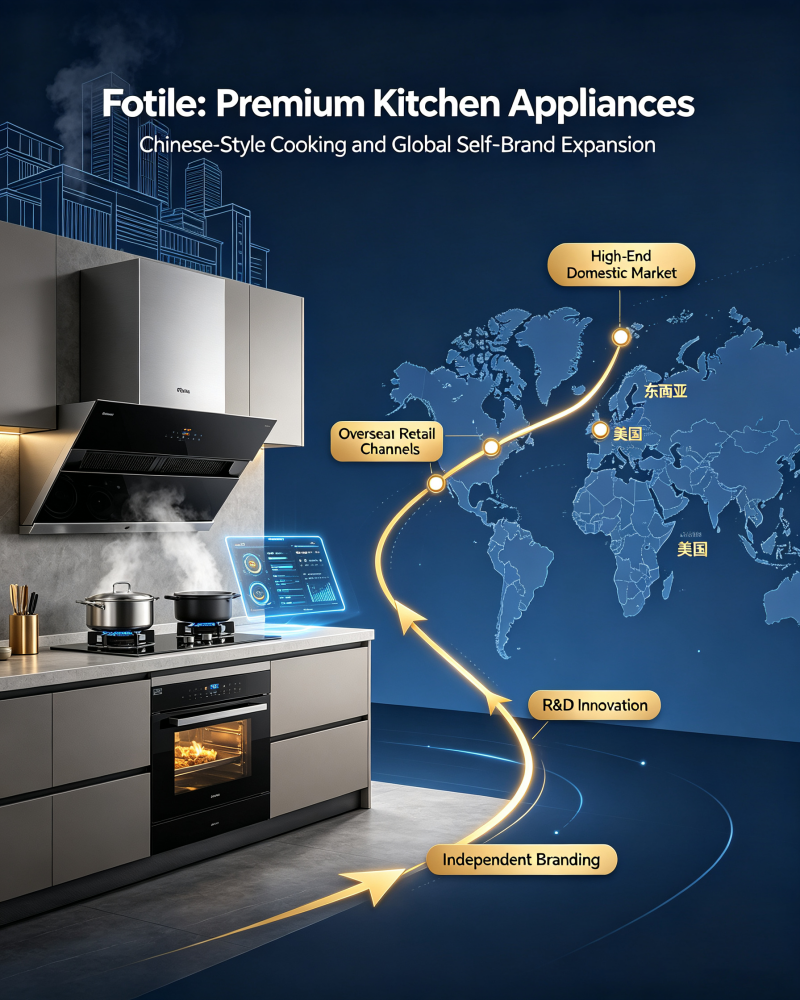
As one of China’s most famous privately‑owned premium kitchen‑appliance conglomerates, Fotile has long been a benchmark brand for high‑end Chinese range hoods, gas stoves, built‑in steam ovens and integrated kitchen solutions. On the 2024 Hurun Global Rich List, the Mao Lixiang family held a net‑worth of approximately USD 3.1 billion, securing a global billionaire ranking of 987. One year later in the 2025 ranking, family wealth climbed to USD 3.4 billion, lifting their global position up to 861, an upward movement of 126 ranks. This wealth increase mainly stemmed from stable domestic high‑end‑market occupancy and steadily‑growing overseas self‑brand revenue.
Fotile’s core business focuses on specialized cooking‑equipment designed for Chinese‑style stir‑frying, distinguishing itself from Western kitchen‑appliance brands that prioritize baking and slow‑cooking functions. Rather than rushing into initial‑public‑offering listing, Fotile has maintained private ownership, adopting an internal profit‑sharing incentive system for long‑tenured employees, which has helped the firm retain core R&D talent and sustain consistent product‑innovation output. In terms of development strategy, the company follows a dual‑track growth roadmap: deepening premium‑segment penetration within China, and executing deliberate international expansion under its own Fotile trademark, rejecting low‑profit original‑equipment‑manufacturer OEM export cooperation. Its overseas market layout began in Southeast Asia more than two decades ago, later expanding into the United States, where Fotile products are sold through major home‑improvement retailers including Home Depot and Lowe’s, alongside its independent branded stores across high‑consumption‑level US states.
When evaluating international brand‑name awareness, Fotile remains far better‑known among overseas Chinese communities and Asian‑style restaurant operators than mainstream Western households. Nevertheless, its long‑term self‑branding strategy has laid a solid foundation for future global growth, avoiding the common trap of Chinese kitchen‑goods manufacturers trapped in low‑value‑added OEM production.
Case 2: Werhahn Family, Owner of Zwilling J. A. Henckels
Representing Europe’s long‑established luxury kitchenware heritage, the Werhahn family owns the world‑renowned Zwilling brand, founded in 1731 in Solingen, Germany, famous for premium kitchen knives, stainless‑steel cookware, kitchen gadgets and small home appliances, distributed in over one hundred countries worldwide. Between the 2024 and 2025 Hurun Global Rich List editions, the Werhahn family’s estimated wealth slipped moderately from USD 4.8 billion down to USD 4.5 billion, pushing their global billionaire ranking from 612 back to 685. The wealth decline largely reflected weak consumer sentiment within Western‑Europe home‑goods markets, where high inflation suppressed discretionary spending on premium kitchen‑upgrade purchases.
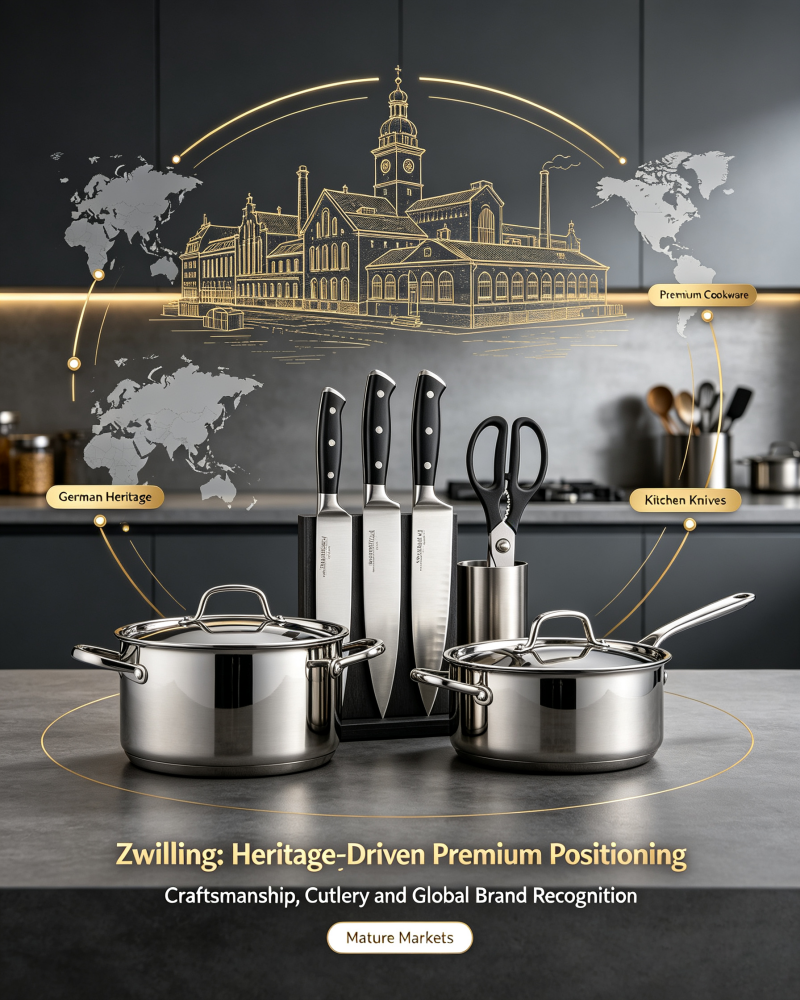
Zwilling’s business portfolio balances traditional forged‑cutlery heritage with diversified kitchen‑product lines. The enterprise’s core development strategy centers on heritage‑driven premium positioning, continuous craftsmanship innovation, targeted acquisition of smaller kitchen‑tool brands, and localized regional marketing campaigns across major continents. In Asia, especially China, Zwilling has built extremely strong international‑brand recognition, widely perceived by consumers as a symbol of reliable German‑made kitchen quality. While facing fiercer competition from mid‑range Asian cookware brands in recent years, Zwilling still maintains powerful pricing power within the global high‑end kitchenware market.
Case 3: Antonio Tramontina Family, Tramontina (Brazil)
Founded in 1911, Tramontina ranks as Latin America’s largest kitchenware manufacturer, producing cookware, cutlery and household hardware, with commercial presence across 120 nations. On the 2024 Hurun Global Rich List, the Tramontina family registered USD 2.2 billion in net assets, ranking 1 251 globally. By the release of the 2025 list, their wealth rose to USD 2.6 billion, jumping upward by 217 global ranks to position 1 034. This remarkable wealth gain was primarily generated by successful market expansion across India and Southeast‑Asian emerging consumer markets.
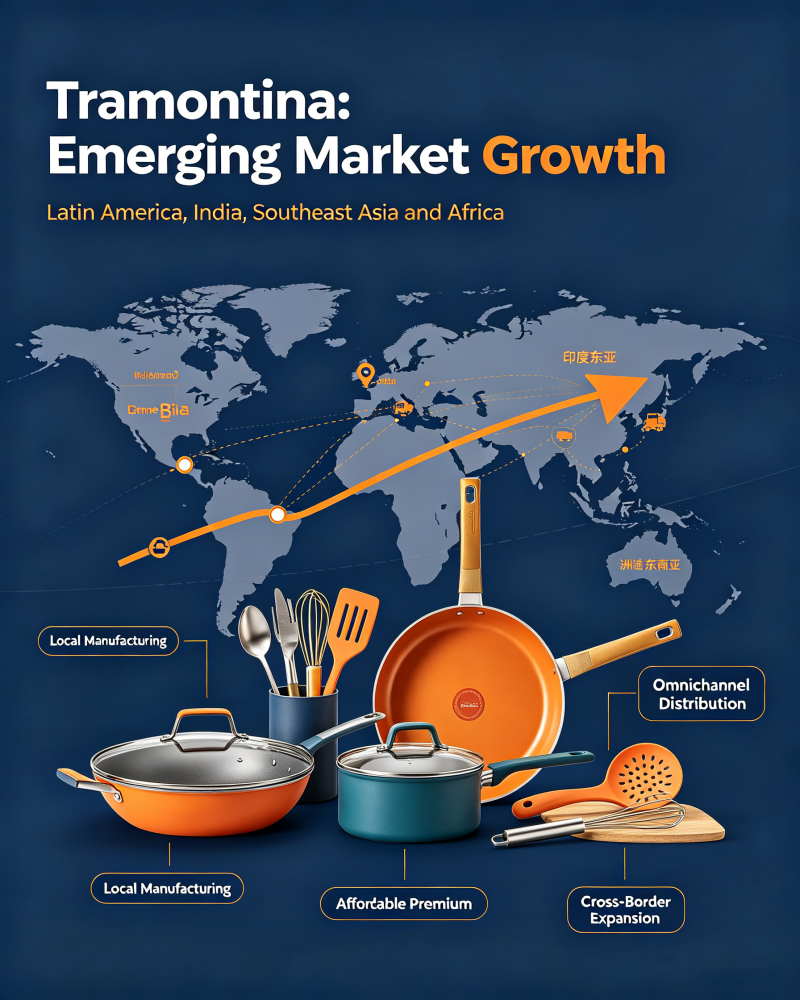
Tramontina’s corporate strategy prioritizes omnichannel distribution, local manufacturing investment in target emerging economies, and mid‑end affordable‑premium product positioning, avoiding direct head‑on competition against ultra‑luxury European kitchenware brands. Its international brand awareness is strongest throughout Latin America, Africa and South‑Asia, while visibility within North‑American and European consumer markets remains comparatively limited.
Root Causes Behind Ranking and Wealth Fluctuation
Three major factors explain the divergent fortunes of these kitchen‑sector billionaires between 2024 and 2025. First, regional‑consumption differences heavily impacted revenue performance. Mature markets in Western Europe saw slow kitchen‑goods sales, while fast‑growing emerging economies in Southeast Asia, the Middle East and India delivered substantial revenue growth for brands with established local distribution networks. Second, brand‑operation models created large profit gaps. Self‑branded exporters earned far higher profit margins than OEM‑only kitchenware factories, whose revenue remained vulnerable to raw‑material‑price swings and intense price‑cut competition. Third, strategic positioning determined long‑term valuation trends. Enterprises focused on premium, differentiated, culture‑oriented kitchen‑solutions enjoyed more stable market demand than mass‑market commodity cookware manufacturers.
Industry‑Wide Strategic Insights
The comparison of these kitchen‑industry billionaires reveals clear‑cut trends for the global kitchenware sector. Premium kitchen‑goods brands with unique‑product‑differentiation advantages possess stronger anti‑risk capabilities against economic cycles. For Asian kitchen‑appliance companies, independent overseas‑brand‑building rather than short‑term OEM export represents the most sustainable long‑term growth pathway. European heritage kitchen‑brands must continuously refresh product lines to attract younger‑generation consumers, otherwise they risk gradual ranking erosion during periods of economic pressure. Latin‑American kitchenware manufacturers can achieve steady wealth expansion by capturing untapped consumer demand in high‑growth emerging markets.
Conclusion
The 2024‑2025 Hurun Global Rich List comparison demonstrates that wealth outcomes for kitchen‑industry billionaires are closely tied to geographic‑market layout, brand‑building choices and product‑segment positioning. While no single universal winning strategy exists, tycoons who invest in long‑term international‑brand recognition and differentiated kitchen‑technology development consistently deliver the most resilient financial results. As global consumer interest in home cooking continues rising, kitchen‑sector entrepreneurs who successfully balance mature‑market maintenance and emerging‑market expansion are well‑positioned to climb further up future global billionaire rankings.