What an ice cream mold is really for
An ice cream mold seems simple enough: fill it, freeze it, unmold the result, and serve. But for buyers, that simple loop hides a few practical questions. Is the mold stable enough to handle a liquid mix without tipping? Does it release cleanly when frozen? Will it hold up to repeated use in a home kitchen or a small dessert operation? Those are the decisions that matter more than the color of the sticks.
The version described here is a reusable ice cream mold with individual cavities and removable stick handles, the kind used for frozen dessert bars, fruit pops, yogurt pops, juice bars, and layered treats. It is the sort of product people often search for as an ice cream maker mold or an ice cream popsicle mold, but the real buying issue is broader: you are choosing a tool that affects portion control, texture, freezing efficiency, and cleanup.
Quick take: what this style of mold does well
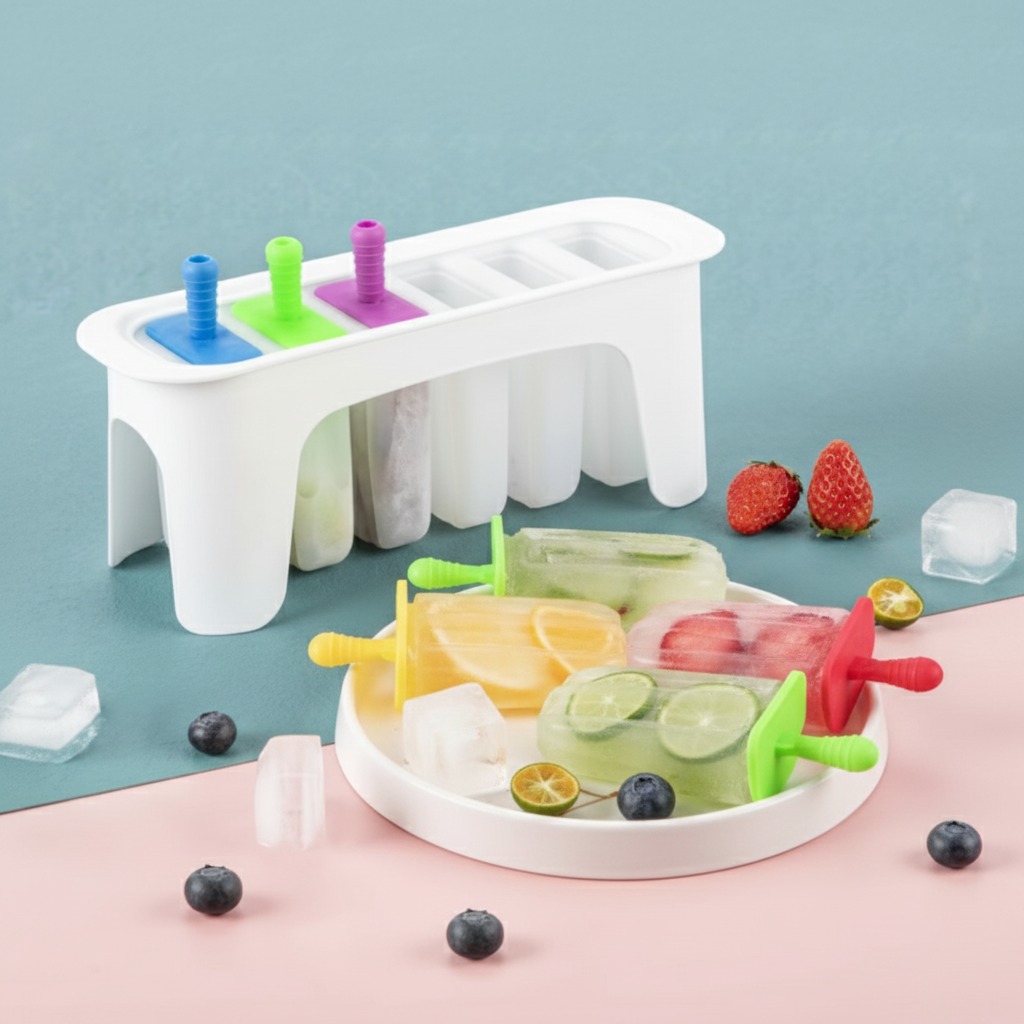
Compared with improvised cups or single-use packaging, a molded tray gives more consistent shape and cleaner handling. The elevated frame keeps the cavities raised, which is useful when you are filling a liquid mixture on a counter or placing the tray into a freezer without fuss. The removable sticks are another practical touch. They let each frozen piece come out individually rather than forcing you to break or cut the product free.
For households, that usually means less mess and more repeatability. For small foodservice users, it can mean a faster prep rhythm and better portion discipline. The multi-color handles may also help distinguish flavors or batch types, which sounds minor until you are making several recipes at once.
How this type of ice cream mold is built
Based on the product description, the mold body appears to be a white plastic tray with a smooth glossy finish and a row of vertical cylindrical or rounded cavities. The exact polymer is not identifiable from the image, so any food-grade assumption should be treated carefully unless the supplier states it clearly. That caution matters. In kitchenware, “looks suitable” and “verified for food contact” are not the same thing.
The structure suggests injection-molded consumer kitchenware, which is common for reusable frozen dessert tools. That manufacturing route typically supports consistent cavity shape, repeatable assembly, and lower per-unit cost at volume. It also allows multiple handles or sticks in different colors, which is useful for product presentation and organization.
Ice cream mold set or single mold: what buyers should compare
When people shop for an ice cream mold set, they often focus on how many pops the tray makes. That matters, but not as much as fit for purpose. A tray with about six cavities may be enough for a family kitchen, yet a café or catering prep room may prefer multiple trays or a larger production rhythm.
Here is the more practical comparison:
Household use: easy filling, easy freezing, easy cleanup, and enough yield for weekend batches.
Small foodservice use: stable base, consistent shape, and the ability to prep several flavors without confusion.
Retail or branded desserts: presentation, repeatable portion size, and clean unmolding become more important than novelty.
Materials and freezer performance: where caution helps
A quick freeze ice cream mold sounds appealing, but buyers should be careful with claims. Faster freezing depends on recipe, cavity size, freezer load, and contact between the mold and cold air, not just the tool itself. A well-designed tray can help, especially if it is shallow and evenly shaped, but it cannot override a weak freezer or a syrup-heavy mix that freezes slowly.
The same caution applies to durability. Reusable plastic kitchenware is appealing because it avoids waste, yet repeated thermal cycling can still reveal weak points at handles, seams, or cavity edges. If the mold will be used often, those details deserve a closer look than the marketing photos usually get.
What recipes work best in a homemade ice cream mold
A homemade ice cream mold is useful well beyond dairy ice cream. Many operators and home users lean on fruit blends, yogurt mixes, cream-based fillings, and layered frozen desserts because they freeze predictably and unmold with less struggle. Juice bars and fruit pops are especially forgiving, while richer dairy formulas may need a little trial and error to get the right texture.
If you are making layered products, the separate cavities are useful because they let you build batches without the pieces touching. That matters in a freezer where movement, vibration, and stacking are part of normal life. A tray that keeps everything upright can save a batch from leaning or spilling before it sets.
Common buyer mistakes
The most common mistake is assuming all ice cream molds are interchangeable. They are not. Some are better for children’s treats, some for high-volume prep, some for decorative presentation, and some simply for low-cost novelty.
Another frequent miss is ignoring release behavior. A mold that looks sturdy but grips the frozen product too tightly will frustrate users every time. Buyers should also avoid relying on assumptions about dishwasher safety, lid inclusion, or exact capacity unless the supplier states those details plainly. In kitchenware, the small missing fact is often the one that later causes complaints.
Buyer-facing advice before you place an order
If you are sourcing an ice cream mold for resale, catering, or private-label use, ask for the basics in writing: material identification, food-contact status, cavity count, overall dimensions, and whether accessories such as lids or drip guards are included. If you are buying for your own kitchen, think about how the mold will actually be used. Will it sit in a packed freezer? Will it be filled with thick mixes or thin juice? Will children handle the sticks?
Those details shape the right purchase more than appearance does. A good mold should be stable, reusable, and straightforward to unmold. That is the job. Everything else is secondary.