Why a stackable ice cube mold matters more than it looks
A stackable ice cube mold sounds like a small purchase, until you start using one in a real freezer. Then the practical questions show up quickly: does it leak when you move it, does it keep freezer smells out, and can you fit more than one tray without playing freezer Tetris? For households, cafés, cocktail programs, and private label buyers alike, the right stackable ice cube mold is less about novelty and more about daily convenience.
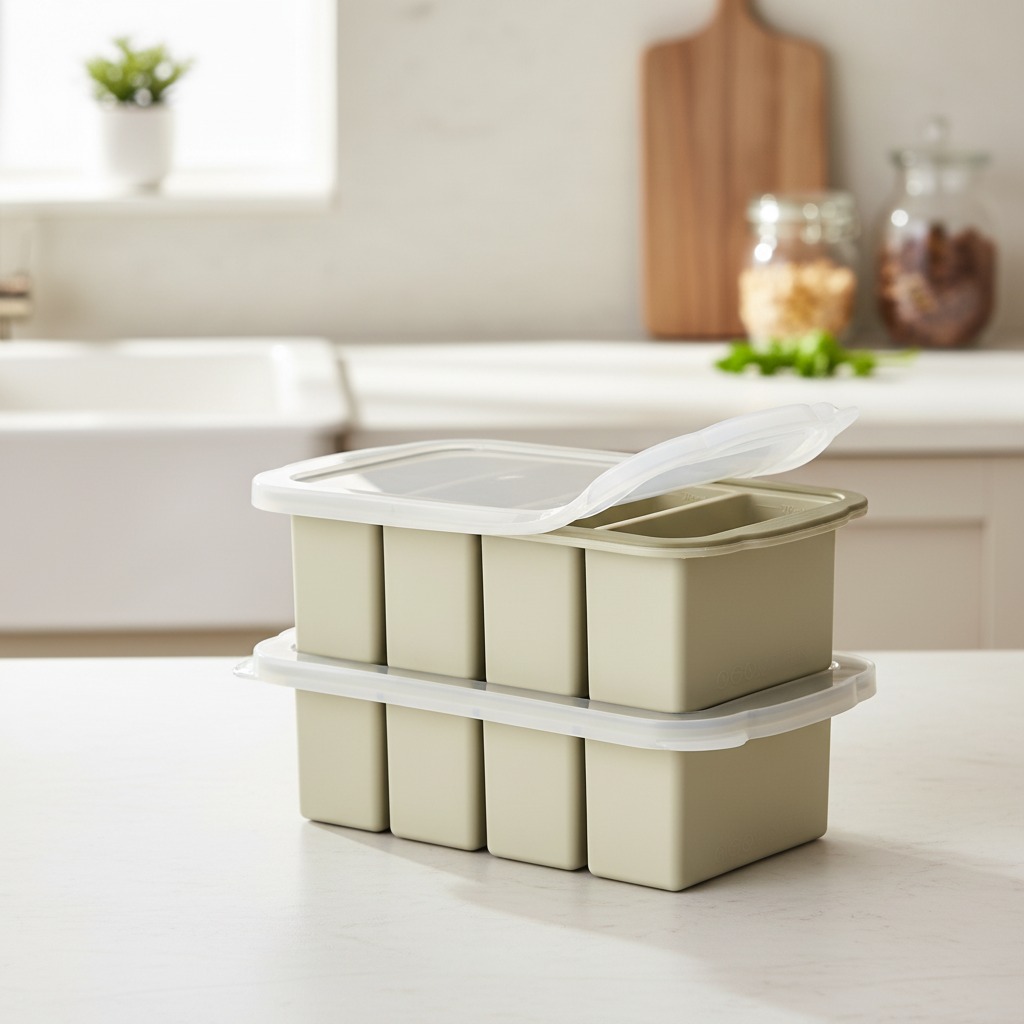
The product here is a silicone ice cube mold set with a lid, built around large rectangular cavities and a rigid outer frame. That combination tells you a lot. It is meant to freeze water or other liquids into larger blocks, it is meant to sit neatly in a freezer, and it is meant to reduce the usual nuisance of open trays spilling on the way from sink to shelf. For buyers comparing freezer safe ice mold options, those details matter more than a glossy product photo.
What the design suggests in everyday use
This style of tray is built around a flexible silicone body with a retaining ring or base frame, plus a fitted lid. The beige or tan mold body gives the softer, food-contact look common in silicone kitchenware, while the translucent lid adds the practical bit: cover the tray, stack another one above it, and keep the freezer organized. The design is especially useful if the tray is filled with water, juice, coffee, stock, or other liquids that need a slow, stable freeze.
Large rectangular cavities are another clue. Larger ice pieces melt more slowly than tiny cubes, which is why bartenders, home entertainers, and beverage brands often prefer them. They chill without drowning the drink too quickly. That is a simple point, but it is the reason many buyers move from a basic tray to a stackable silicone ice tray with a lid.
Behind the scenes: why silicone and a separate lid are common
From a manufacturing angle, food-grade silicone is a sensible material choice for this category. It is flexible enough to release frozen shapes, yet durable enough for repeat use. A separate molded lid, whether it is silicone or plastic, is often added for splash control and odor protection. The exact material of the lid is not confirmed here, so buyers should not assume more than what is visible.
At a factory level, this kind of product usually falls into a repeatable production pattern: molded silicone parts, a formed frame for support, then assembly into a set that feels sturdier than a loose tray. That is one reason wholesale ice cube mold buyers often ask not just about price, but about consistency. If the frame flexes too much, the tray becomes awkward to carry. If the lid sits poorly, stacking stops being useful.
Key buying criteria for sourcing teams
If you are evaluating a stackable ice cube mold for retail or private label use, start with the basics: food-contact material quality, ease of demolding, stackability, and how the lid behaves in a busy freezer. A BPA-free claim is a helpful selling point in consumer channels, though it should still be handled carefully in product copy and compliance review.
Next, look at the geometry. Rectangular cavities with rounded corners are easier to release than sharp-edged forms, and they tend to hold up better in regular use. For beverage applications, larger blocks are usually the point. For batch freezing stock or coffee, the question is whether the cavity size matches the serving or recipe habit of the end user. That sounds obvious, but mismatched size is a common buyer mistake.
Questions worth asking before you place an order
Does the lid only cover, or does it also help prevent freezer odors? Is the tray rigid enough to carry when filled? Can the set be stacked while full, or only when empty? Exact answers depend on the finished sample, not assumptions. In this category, small differences in fit and finish change the user experience more than many sourcing teams expect.
Where this product fits in the market
Guangzhou Artrue Home Co., Ltd. works across silicone kitchenware, baking molds, storage products, household accessories, and related daily-use goods. That broad product base is useful context, because it suggests the company is set up for multi-category buyers rather than a single niche. With a manufacturing base of over 25,000 square meters and annual output reported above 26 million pieces, the company appears positioned for wholesale and export programs, including retailers, supermarkets, e-commerce sellers, distributors, and private label brands.
For sourcing managers, that matters because a product like this is often judged not only as a single SKU, but as part of a range. A stackable ice tray can be color-customized, bundled, or paired with storage and kitchen accessory lines if the factory setup supports it. Artrue’s exhibition presence and export markets also suggest it is used to working with international buyers, though each program still needs its own sample approval and specification check.
Common mistakes buyers make
The most common mistake is treating all ice trays as interchangeable. They are not. A basic open tray is not the same as a freezer safe ice mold with a lid and frame. Another mistake is overpromising what the lid does. Unless it is specified and tested, do not describe it as airtight. That kind of wording can create avoidable complaints later.
A more subtle issue is ignoring end-use. A tray designed for cocktail ice may not be ideal for batch-freezing soup, stock, or coffee concentrates if the cavity size or release behavior does not suit the liquid. Buyers who think through the use case usually get fewer returns and better reviews.