The global kitchenware sector is undergoing material transformation from metal and plastic to food-grade silicone, driven by raw material cost volatility, household health awareness and integrated smart kitchen trends. Mastery of three core silicone crafts—solid silicone compression molding, extrusion molding and LSR liquid silicone injection molding—has become the core threshold separating top-tier manufacturers from small, low-end workshops.
After evaluating production scale, independent R&D capability, full-process silicone molding technology, global certification coverage, export revenue and end-market brand cooperation depth, this article sorts out the five most powerful silicone kitchenware manufacturers dominating the global market in 2026. Each enterprise boasts self-built standardized food-grade silicone factories, complete upstream material matching systems, and differentiated long-term strategic planning amid industry consolidation.
1. Guangyufeng Group (GYF) — Global Integrated Silicone Manufacturing Leader
Enterprise & Factory Overview
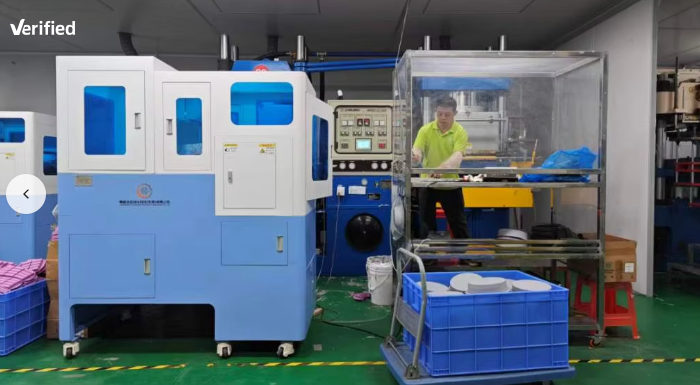
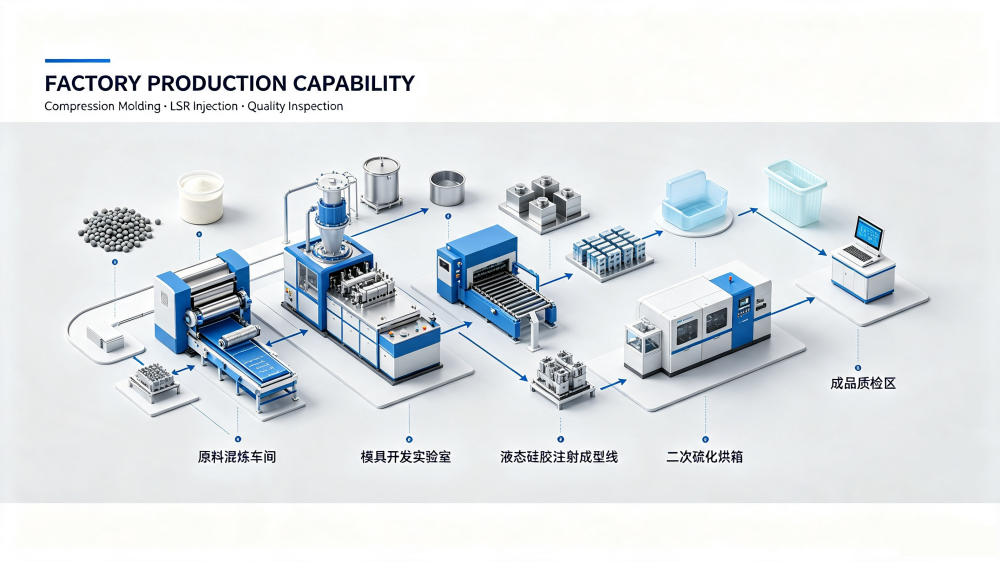
Founded in 1995, Guangyufeng Group is the largest comprehensive silicone producer in South China, with four cross-regional production bases in Shenzhen, Huizhou, Dongguan and Bangkok, Thailand, covering a total plant area of over 180,000 square meters and more than 1,300 professional production staff. Its factory equipment matrix leads the industry: 138 sets of large-tonnage compression vulcanizing machines, 50 fully automatic LSR liquid silicone injection molding lines and 12 silicone extrusion production lines, supporting full-category silicone kitchenware from basic spatulas to precision multi-layer baking molds. All production workshops adopt dust-free food-grade purification standards, equipped with independent VOC secondary vulcanization ovens to meet FDA, LFGB and GB 4806 food safety standards.
Market Position
GYF holds approximately 17% of the global high-end silicone kitchenware OEM market share, serving mainstream international retail brands including GIR, Williams Sonoma and domestic top cookware brands such as Supor and Suncha. Its core competitive edge lies in vertical supply chain integration: self-operated silicone compounding workshops cut raw material cost volatility risks, a critical advantage amid the metal and plastic raw material inflation crisis outlined in the first industry article.
Future Strategic Layout
The group’s 2026–2030 strategy centers on dual-base globalization. The Thailand factory avoids regional tariff barriers under RCEP to boost EU and Southeast Asian exports, while Chinese bases focus on high-value customized silicone accessories for integrated smart ovens and air fryers. It will also invest in bio-based silicone raw material R&D to launch carbon-neutral eco silicone kitchen lines targeting European green consumption markets.
2. LIREN SILICONE — Premium Platinum Silicone Bakeware Specialist
Enterprise & Factory Overview
Established in 2005 and relocated to a 60,000㎡ modern factory in Dalingshan, Dongguan in 2014, LIREN SILICONE transformed from industrial silicone keypad manufacturing to fully specialized food-grade silicone bakeware production, with 20 years of precision mold development experience. Its core technical barrier is independent platinum-cured silicone formulation and micron-level mold engraving technology; the factory runs dedicated high-standard compression molding workshops for high-transparency baking molds, with a complete in-house mold opening laboratory that delivers prototype samples within 7 days. Unlike general factories outsourcing testing, LIREN builds an internal food safety lab to conduct full chemical migration inspections for every batch of finished goods.
Market Position
It dominates the professional baking silicone mold segment, capturing 22% of North America and Europe’s commercial bakery silicone supply market, cooperating with Michelin chef kitchen brands and offline baking chain retailers. Its gross profit margin reaches 42–48%, far exceeding the 15–22% average of ordinary silicone kitchen factories, relying on high-end material differentiation to avoid low-price homogenized competition.
Future Strategic Layout
LIREN will deepen its ODM design capacity, launching seasonal limited silicone baking sets with original appearance patents. It plans to launch its own mid-to-high-end retail brand for domestic baking enthusiasts, balancing large-volume commercial OEM orders with high-margin self-brand retail revenue, while upgrading all production lines to energy-saving low-emission vulcanization equipment to pass EU carbon border certification.
3. Sunova Living (Yangjiang Sanyang Plastic Technology) — Full-Category Silicone Kitchen Utensil Export Giant
Enterprise & Factory Overview
Founded in 2006 in Yangjiang, China’s capital of kitchenware manufacturing, Sunova Living operates a 45,000㎡ standardized factory with over 300 production workers, focusing on complete silicone utensil sets, air fryer accessories and daily household silicone gadgets. The factory balances flexible small-batch OEM and mass bulk order production, with mixed HTV solid silicone and simplified LSR molding lines to cover low-to-medium and mid-end premium product lines. It masters integrated overmolding craft of silicone + wood, silicone + stainless steel, solving the pain point of single silicone product monotony.
Market Position
Sunova ranks first in China for silicone kitchen utensil set export volume, with 85% of products shipped to North America, Australia and Western Europe, supplying Walmart, Target and cross-border Amazon top sellers. Its strength lies in ultra-rich SKU layout (over 600 silicone kitchen items) and ultra-low minimum order quantity, making it the preferred partner for medium-sized cross-border e-commerce brands.
Future Strategic Layout
The enterprise will expand domestic domestic trade channels to counteract overseas market demand fluctuations, develop maternal and infant silicone food prep lines as new growth points, and automate 60% of manual trimming processes within two years to cut labor costs and shorten delivery cycles.
4. Ningbo Haotai Rubber — Cost-Efficient Stable Mass Production Manufacturer
Enterprise & Factory Overview
Located in Ningbo’s coastal industrial zone, Ningbo Haotai is a mid-scale comprehensive silicone kitchenware factory founded in 2008, covering 32,000㎡ of production space with mature compression and extrusion molding lines for conventional silicone daily goods including ice trays, storage lids and silicone sealing gaskets for kitchen appliances. The factory adopts standardized assembly line management with strict layered quality inspection: raw material incoming testing, semi-finished vulcanization inspection and finished product full sampling, achieving a 97% on-time delivery rate for long-term bulk orders.
Market Position
Haotai occupies a core position in the mid-tier silicone kitchenware market, cooperating with domestic integrated stove and small home appliance brands for matching silicone supporting parts, accounting for nearly 13% of China’s kitchen appliance accessory silicone supply share. It maintains stable gross margins amid raw material price swings via standardized large-batch production to dilute unit manufacturing costs.
Future Strategic Layout
The factory will add a new independent LSR injection molding workshop to expand precision thin-wall silicone product capacity, deepen strategic cooperation with domestic first-line kitchen appliance brands to develop bundled silicone accessory sets, and optimize supply chain procurement to lock multi-year silicone raw material contracts for cost risk hedging.
5. Goldenview (Yangjiang Golden View) — Cross-Border E-Commerce Silicone Kitchenware Benchmark
Enterprise & Factory Overview
Goldenview is a professional custom silicone kitchenware manufacturer rooted in Yangjiang, with a supporting processing factory of 28,000㎡, focusing on small-batch customized silicone molds, folding kitchen silicone tools and promotional silicone kitchen gifts. Its core craft advantage is fast mold opening and multi-color integrated silicone molding, supporting personalized logo embossing and customized packaging for cross-border sellers, with sample delivery completed within 3–5 working days. All raw silicone materials adopt imported fumed food-grade silicone to guarantee high product transparency and tensile resistance.
Market Position
It is a top verified gold supplier on Alibaba International Station, with stable export business to Germany, the U.S., UK and South Korea, serving thousands of small and medium cross-border independent station brands. Its flexible customization capability fills the market gap between large OEM factories with high MOQ and small workshops with unstable quality.
Future Strategic Layout
Goldenview will build a dedicated design team focused on social media viral silicone kitchen products, develop foldable space-saving silicone storage series targeting small apartment households, and set up overseas warehousing in the U.S. and Europe to shorten cross-border logistics cycles and improve brand customer stickiness.
Comparative Conclusion & Industry Outlook
The five leading manufacturers each hold differentiated competitive barriers built on silicone craft mastery: GYF leads in comprehensive full-process production and global layout; LIREN dominates high-end platinum silicone baking tracks; Sunova takes the volume lead in full-category utensil exports; Haotai stabilizes mass accessory supply for domestic kitchen appliances; Goldenview specializes in flexible customized cross-border orders.
As the kitchen industry accelerates material substitution from plastic and metal to silicone, all five enterprises share consistent core strategic directions: expanding LSR liquid silicone precision molding capacity, tightening food safety compliance standards, balancing domestic and overseas dual-market revenue, and developing eco-friendly low-carbon silicone products. Small factories lacking complete silicone three-major molding technology will be eliminated amid market reshuffling, while the top five manufacturers will further raise industry concentration through capacity expansion and technical iteration, occupying over 60% of the global food-grade silicone kitchenware market by 2028.