Introduction
Soft, elastic and moderately sweet black‑sesame peanut glutinous‑rice balls, also known as homemade mochi, rank among the most beloved traditional Chinese cold desserts. Unlike complicated baked pastries, this sticky‑rice treat requires no oven. With simple steaming, manual shaping and fragrant nut filling, you can create tender, stretch‑resistant mochi that will not stick all over your hands.
This tutorial adopts a tested home‑cook formula with glutinous‑rice flour and cornstarch. Every operation phase is broken down into clear‑cut steps. We will also share practical anti‑stick advice, filling tips and storage knowledge so even cooking beginners can nail this satisfying nut‑flavored sweet snack.
Required Raw‑Material List
For six servings of glutinous‑rice mochi:
Outer‑shell Ingredients
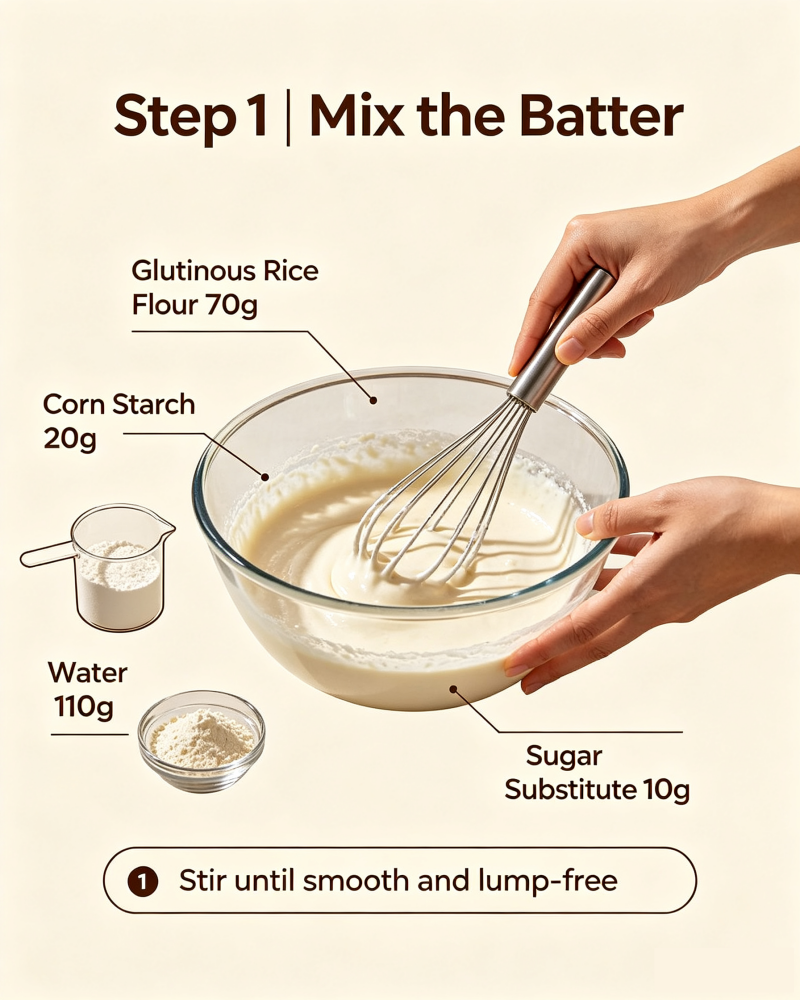
- 70‑gram glutinous‑rice flour (sticky‑rice powder)
- 20‑gram corn starch
- 110‑gram clean drinking water
- 10‑gram zero‑calorie sugar substitute
Filling and Finishing Supplies
- Crushed roasted peanuts
- Ground black sesame seeds
- Cooked fine soybean powder for outer coating
You can swap the sugar substitute for white granulated sugar if you prefer classic sweet flavors. Corn starch keeps the steamed dough soft and prevents excessive stickiness, which is a vital trick for easy‑to‑handle mochi wrappers.
Detailed Six‑Step Making Guide
Step 1: Mix all dry and liquid raw materials thoroughly
Prepare a clean deep mixing bowl. Pour your measured‑out glutinous‑rice flour, cornstarch, zero‑calorie sweetener and room‑temperature water into the container. Grab a manual egg whisk and stir the mixture continuously.
Keep stirring until every lump of rice powder dissolves completely. Your finished batter should turn into smooth, runny, lump‑free liquid. Thick lumps will result in uneven texture inside the steamed dough, so double‑check for undissolved powder before moving on to steaming work.
Step 2: Steam the batter for 25 minutes
Cover the top of your mixing bowl tightly with plastic food wrap. The plastic film locks in steam moisture and stops condensed water from dripping into your mochi batter. Then place the covered bowl on the perforated steaming rack inside a boiling‑water steamer pot.
Maintain strong boiling‑water heat and steam the batter for a full 25 minutes. After steaming finishes, do not rush to take out the dough. Proper steaming time guarantees that all starch inside the batter gelatinizes completely, creating that signature chewy and stretchy texture. Under‑cooked dough will stay runny and hard to shape.
Step 3: Cool the cooked dough and knead for elasticity
Take the hot steamed sticky‑rice dough out and set it aside until it cools down to a bearable hand‑touch temperature. High‑temperature dough sticks badly to bare skin, so slip on disposable food‑safe plastic gloves before touching the warm mass.
Stretch and fold the warm dough repeatedly several times. This short kneading process makes the mochi wrapper much more elastic, smooth and glossy. Well‑stretched dough resists tearing when you wrap nut‑seed fillings later. If the dough still sticks lightly to gloves, you can dust a tiny amount of cooked cornstarch over its outer layer.
Step 4: Divide the elastic dough into six even‑sized portions
Lay your finished smooth sticky‑rice dough on a flat clean plate. Split the whole lump into six identical small dough balls. Each piece supplies one individual glutinous‑rice ball. Equal‑sized portions help every finished snack maintain consistent thickness for the outer wrapper. At this stage, the pale‑white dough balls look shiny, round and soft.
Step 5: Wrap the homemade black‑sesame‑peanut filling
Flatten one small dough ball gently with your gloved palm into a thin circular wrapper. Prepare your mixed crushed roasted‑peanut and black‑sesame filling. Spoon around three small scoops of nut‑seed mixture on the center of the flattened mochi skin.
Carefully lift up the wrapper edges, gather them together and pinch the seam shut. Make sure no gaps remain on the sealed top, otherwise your fragrant nut filling will leak out. Repeat this wrapping workflow for all six dough portions. You are free to adjust the proportion of crushed peanuts and black sesame according to your taste preference. Roasted peanuts deliver rich oily aroma, and black sesame brings deep, nutty flavor.
Step 6: Roll sealed mochi in cooked soybean powder
Set your sealed filled rice ball onto a plate holding fine cooked soybean powder. Rotate the glutinous‑rice ball and coat its complete outer surface evenly with the yellow soybean powder. The powder acts as a natural non‑stick barrier and adds a mild bean‑flavor layer that balances the sweetness of nut filling. Once coated, your black‑sesame peanut glutinous‑rice ball is ready to serve.
Expert Tips for Better‑Tasting Homemade Mochi
First, never skip the plastic wrap while steaming. Water droplets falling from the steamer lid will ruin your dough consistency and create overly sticky, watery mochi.
Second, always wear disposable gloves when kneading and wrapping. Bare‑hand contact makes the sticky‑rice dough cling stubbornly to your skin.
Third, do not make your wrapper extremely thin. Moderate thickness prevents break‑throughs and filling spill‑out.
Fourth, finished glutinous‑rice balls taste best eaten fresh on the making day. When stored inside an air‑tight box at room temperature, they will stay chewy for roughly 24 hours. Cold refrigeration makes sticky‑rice dough hard, so leave leftover snacks at room temperature instead.
Conclusion
This straightforward steamed‑batter recipe creates wonderfully chewy, fragrant black‑sesame peanut glutinous‑rice balls without complicated kitchen equipment. By strictly following the mixing, steaming, kneading, portion‑dividing, wrapping and soybean‑powder‑coating workflow, home cooks can avoid common mochi‑making troubles such as sticky dough and torn wrappers.
Custom‑adjust your filling sweetness and nut ratio, and this classic sticky rice dessert can easily match your flavor tastes. Suitable for casual family treats, afternoon‑tea snacks and homemade dessert sharing, this no‑oven glutinous‑rice ball recipe is a must‑try for all fans of traditional Asian chewy sweet food.