Manual sausage stuffer vs. other filling methods: what home makers are really choosing
A manual sausage stuffer sits in a very specific middle ground. It is not the fastest way to fill casings, and it is not the most automated. But for many home cooks and small-batch makers, that is exactly the point. If you are deciding between a hand-operated unit, a kitchen attachment, or even a makeshift piping approach, the real question is not simply which tool works. It is which tool gives you better control over texture, fill quality, and batch size without turning sausage day into a wrestling match.
That matters because sausage filling is one of those tasks where a small difference in equipment shows up immediately in the finished product. Overpacked casings split. Underfilled links feel loose and uneven. Air pockets affect appearance and can interfere with a clean twist. A home sausage maker does not need industrial output, but it does need consistency.
Why a hand-operated design still makes sense
The case for a hand press sausage machine is straightforward: it gives the operator direct control. You can slow down for delicate casings, pause when the mixture needs reloading, and adjust pressure by feel rather than by guesswork. For hobbyist charcuterie, that tactile control is often more useful than speed.
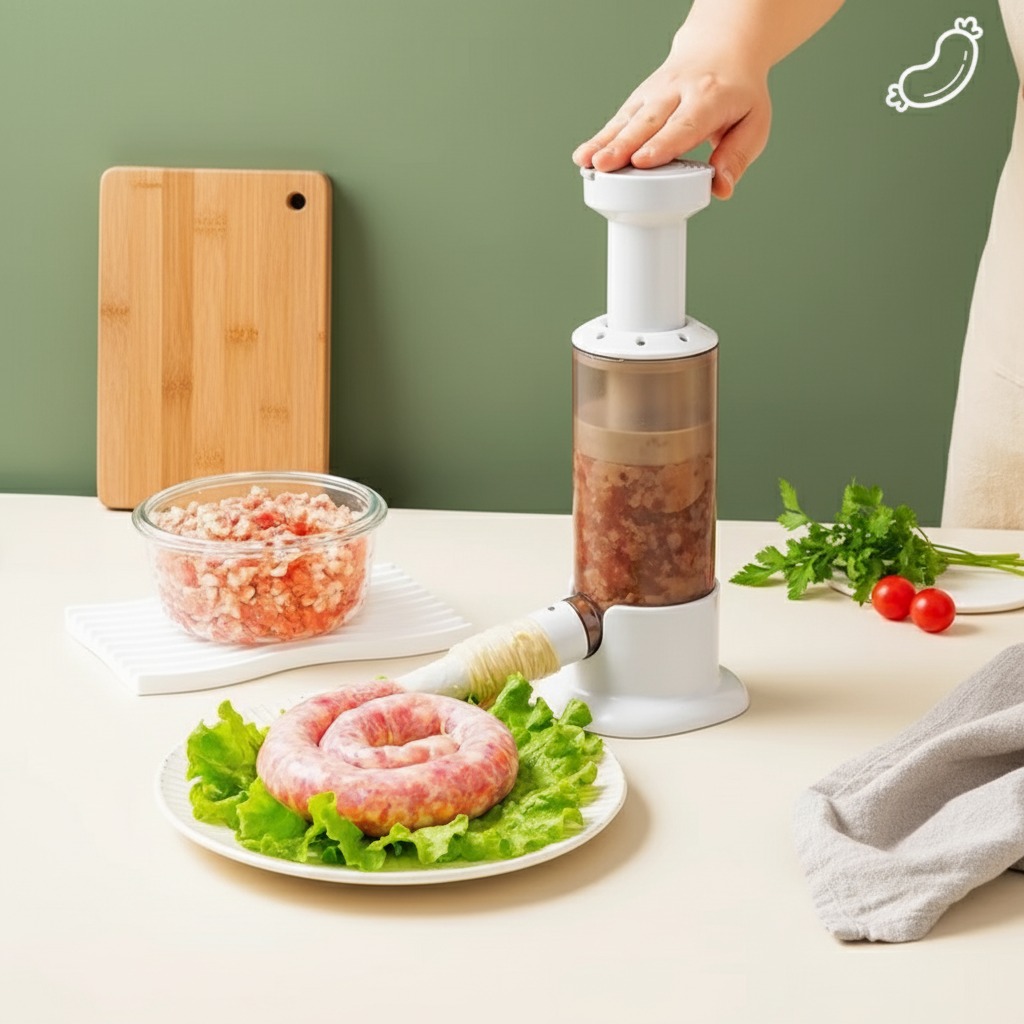
The visible structure described here points to a compact countertop unit with a vertical cylindrical barrel, a clear or translucent chamber, a white plunger assembly, and a side-angled stuffing nozzle. That setup is practical for home kitchens because it keeps the footprint small and lets the user see the meat level at a glance. In real use, that visibility is more helpful than it sounds; it reduces surprise empty runs and helps you judge when to stop and reload.
Manual stuffer, kitchen attachment, or improvised method
Different buyers are usually comparing three paths: a manual meat sausage filler like this, a mixer or grinder attachment, and a less specialized method such as filling by hand. Each has trade-offs.
Manual sausage stuffer
Best when you want controlled filling, a modest batch size, and a dedicated tool that is easier to manage than a full machine. It is also a better fit when you care about link appearance and want to avoid smearing the meat mixture unnecessarily.
Attachment-based filling
Works well if you already own compatible equipment, but it can be awkward for casual use. Attachments are often a compromise between convenience and precision. They may save storage space, though not always effort.
Hand packing or improvised tools
These methods can function in a pinch, but they usually create more air pockets and more mess. They also make it harder to keep pressure even, which is one reason some home batches come out with uneven links.
What the visible construction suggests
The product details suggest a food-processing tool built around likely injection-molded plastic parts, with a clear chamber and food-contact surfaces. That does not tell you everything about durability, but it does tell you something important about use case. This is likely aimed at domestic cooking and small-batch prep, not continuous commercial throughput.
The side outlet is another clue. A single angled stuffing spout is typical of a manual sausage stuffer meant for straightforward domestic work. It helps guide the casing while the operator keeps one hand on the crank or press action and the other on the casing. That division of labor is exactly why a hand-operated design can feel more manageable than forcing meat through a grinder tube.
Selection criteria that matter more than marketing language
Buyers often focus on the novelty of making sausages at home, but the real selection criteria are less glamorous. Ease of loading matters. So does how clearly you can see the filling level. A smooth, stable base matters because a countertop unit that shifts during operation becomes annoying fast. Cleaning practicality is also important, although exact dishwasher compatibility is not confirmed here, so that should always be checked before purchase rather than assumed.
Another practical caution: if you plan to make frequent batches, a manual unit may feel slower than you first expect. That is not a flaw if the batch size is modest. It becomes a problem only when the user expects machine-like output from a hand tool.
Common mistakes buyers make
The most common mistake is overbuying capacity for home use. Bigger is not always better if you are making sausages for a family meal or weekend test batches. Large equipment can be harder to load, clean, and store.
Another mistake is assuming all manual units behave the same. The feel of the press, the stability of the base, and the shape of the nozzle all affect how smoothly the casing fills. A home sausage maker should favor controllability over sheer bulk, especially if the goal is fresh links rather than high-volume production.
Practical buying advice for small-batch makers
If you make sausage occasionally, the clearer chamber and compact form factor are useful features. They reduce waste and make the process easier to monitor. If you are experimenting with recipes, the manual format also gives you better feedback on how the meat mixture flows. That matters when you are testing fat ratio, seasoning distribution, or casing handling.
If you are already committed to larger production, a manual stuffer may still be useful as a backup or test-batch tool. That is a common path in food development: keep the big equipment for volume, and keep the small hand tool for recipe trials or special runs.