Why a fridge storage container matters more than people think
A good fridge storage container is not just about tidier shelves. For engineers, sourcing managers, and product teams, it is a simple household item that sits at the intersection of material choice, sealing design, usability, and food handling behavior. The right container can help reduce odor transfer, slow visible spoilage, and make refrigerated food easier to organize. The wrong one usually leaks, fogs up, warps, or becomes awkward enough that users stop trusting it.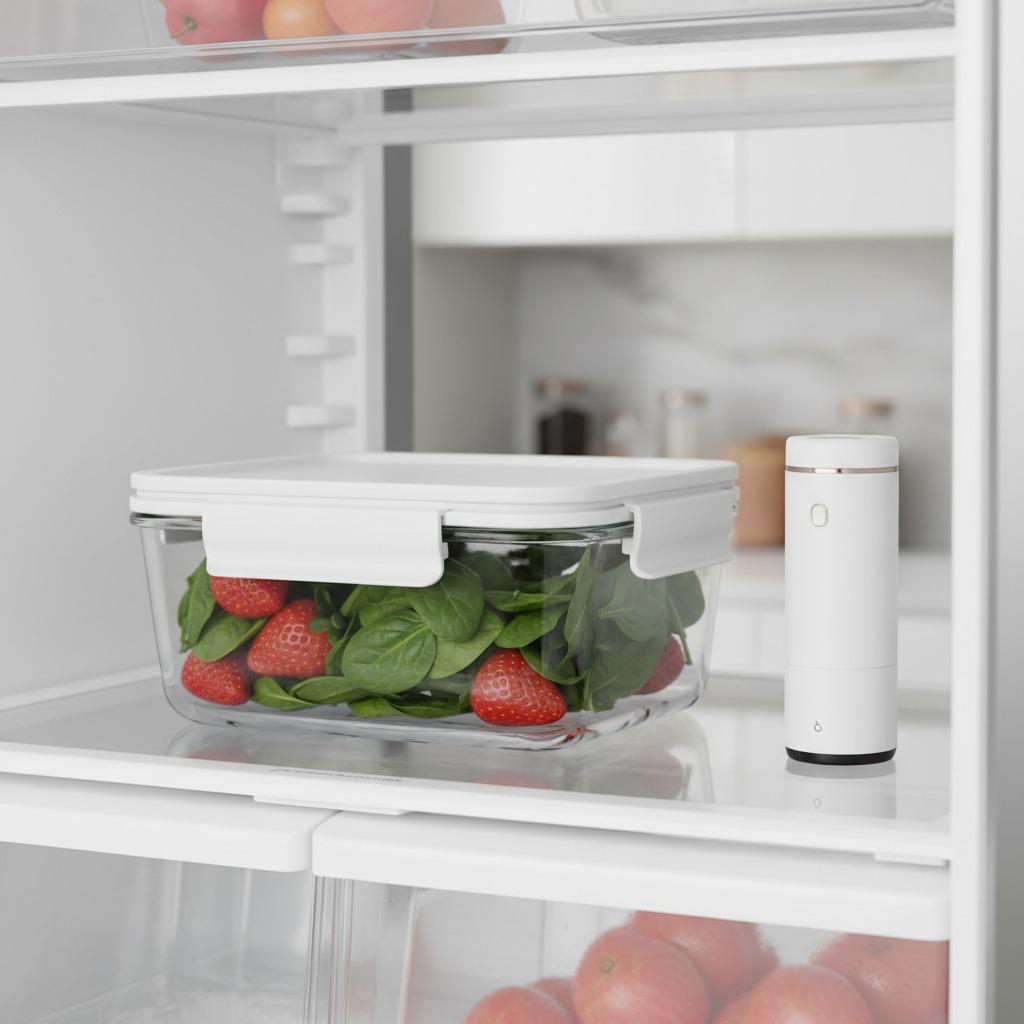
That is especially true for a vacuum-seal food storage box. Once air removal enters the design, buyers are no longer evaluating only a box and lid. They are looking at the lid interface, gasket fit, locking geometry, pump compatibility, and how well the whole assembly supports repeated daily use.
What this type of vacuum storage box is meant to do
This product category is built for countertop and refrigerator use. The container shown is a rectangular, clear-bodied box with rounded corners, a rigid white lid, a visible front latch, and a central vacuum port. A separate compact electric vacuum pump is also shown, which suggests the container can be used as part of a small vacuum preservation system.
In practical terms, that means the user places food inside, closes the lid, and removes air through the port. Less air means less oxidation and less exchange of odors. That matters for strawberries, greens, leftovers, meal prep ingredients, and dry foods that suffer when exposed to refrigerator air.
Quick buyer reference: what to notice first
The visible design points are straightforward, but they tell you a lot about the product’s intent.
The rectangular footprint is useful for shelf organization. The transparent body lets users see contents without opening the box, which is a small feature that makes a real difference in busy kitchens. The front latch adds a mechanical sense of closure, while the gasketed lid and vacuum port suggest the main sealing performance depends on both compression and air removal.
That combination is more interesting than a basic lidded tub. It turns the product into a vacuum preservation box rather than ordinary kitchen storage.
Materials and structure: what is visible, and what is not
The body appears to be a clear rigid plastic or glass-like transparent polymer, but the exact material is not confirmed. The lid is opaque white and likely houses the seal path and vacuum interface. A white inner base or tray is visible inside the box, which may help support food separation or simply form part of the container’s structure.
From a manufacturing point of view, the parts likely come from injection molding, with silicone or elastomer sealing components assembled into the lid area. That is a common route for food storage products because it keeps unit cost manageable and gives enough design freedom for latches, ports, and nested shapes.
A caution here: buyers often ask whether a clear container is glass, Tritan, or another polymer. The image alone does not prove that, so it is better to verify material declarations before making assumptions about impact resistance or temperature behavior.
How the vacuum system changes the buying decision
A vacuum storage box only works well if the user can create and maintain usable suction without making the process annoying. The pictured electric pump is compact, cylindrical, USB-C rechargeable, and marked at 500 mAh and 3 W. That points to a low-power portable device rather than a bulky countertop accessory.
For product teams, this matters because the storage box and the pump are effectively one system. A good container with a poor pump, or a decent pump paired with a finicky valve, will still frustrate users. The reverse is also true. Even a simple container can feel premium if the vacuum action is easy to trigger and repeat.
What to evaluate in the pump
Keep an eye on battery behavior, ergonomics, charging method, and how cleanly the pump mates with the port. The visible USB-C port is a plus from a consumer convenience standpoint, but the real test is whether the suction step feels reliable after repeated use.
Do not over-spec this category on paper alone. Buyers care less about abstract pump claims and more about whether the lid seals evenly and the food stays accessible for everyday storage.
Common use cases in the kitchen
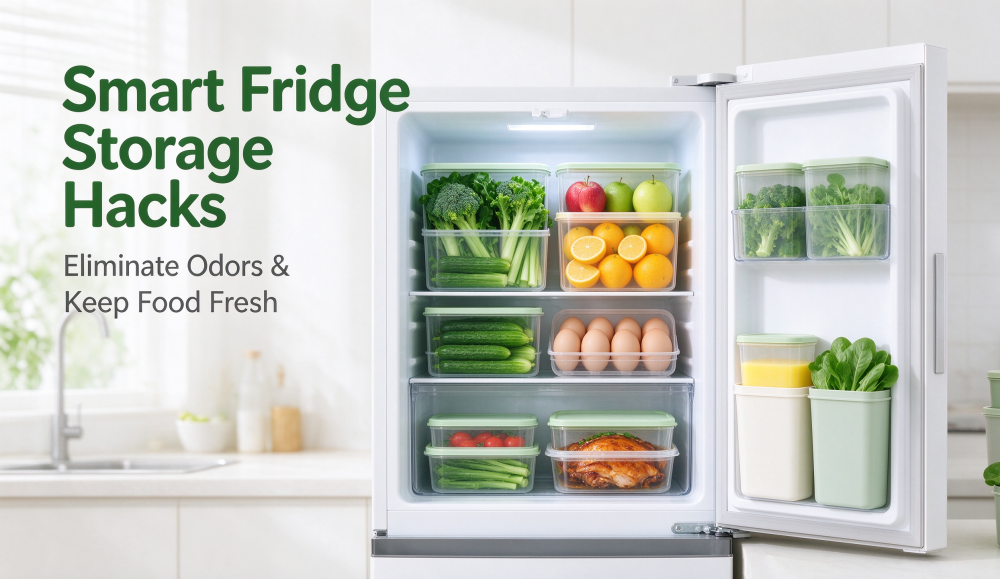
This kind of vacuum sealed box is useful for more than just “keeping food fresh.” In a real refrigerator, it helps with shelf order, portion control, and reducing cross-odor problems. Meat, cut fruit, salad ingredients, leftovers, and prepared meals all benefit differently from a sealed environment.
For meal prep, visibility is a major advantage. Users can store several boxes, see what is inside at a glance, and rotate food before it gets forgotten in the back of the fridge. For pantry use, the same design can help with dry goods that need a cleaner, more controlled storage environment.
Selection criteria for sourcing and product planning
If you are comparing a fridge storage container against a basic kitchen storage container, the key questions are practical rather than decorative.
Check the lid geometry first. Look at how the latch, port, and gasket area work together. Then look at the body shape: a space saving storage box should stack, nest, or at least sit cleanly on a shelf.
After that, ask about the details the image does not confirm: dishwasher compatibility, freezer use, microwave use, seal retention, and whether the vacuum feature is intended for solids only. Those are the questions that determine returns and customer complaints later.