Silicone Kitchenware Benefits: Why Buyers Keep Moving Away from Rigid Plastic
For cooks who work around boiling water, saucy pans, and crowded prep benches, silicone kitchenware benefits are not a lifestyle trend so much as a practical purchasing decision. A good silicone spoon or serving tool sits in a useful middle ground: it is softer than metal, usually easier on cookware surfaces than hard plastic, and far less fussy than older utensils that warp when they get close to heat. That matters whether you are fitting out a home kitchen, sourcing for a small foodservice operation, or simply replacing a drawer full of tools that never seem to last.
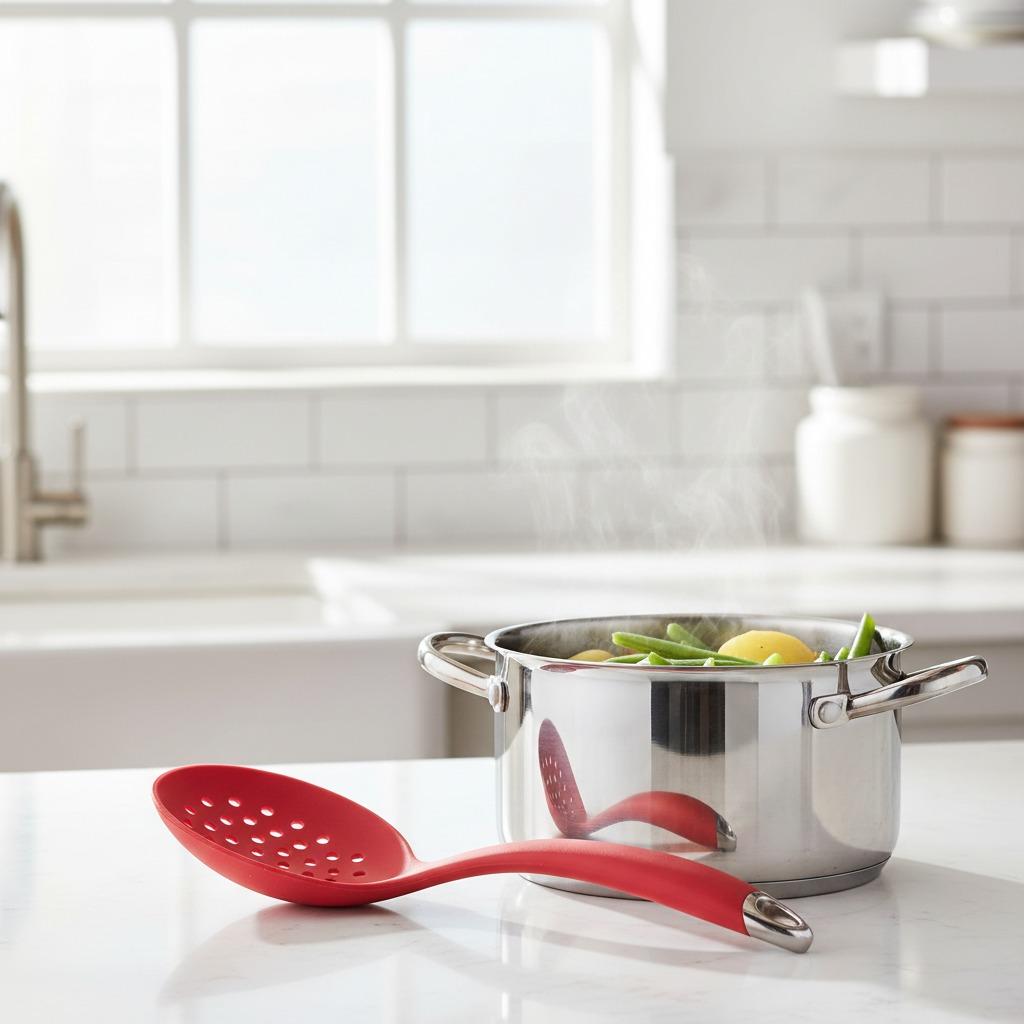
The image of a stainless steel stock pot with a red slotted spoon in use says a lot about why buyers care. Hot liquids, steam, draining, serving, and repeated contact with cookware edges all expose the weak points of cheaper utensils. This is where silicone earns attention. Not because it solves every problem, but because it reduces a few common ones at once.
What silicone does well in daily kitchen work
The strongest silicone kitchen utensil advantages are usually found in routine tasks rather than dramatic ones. Silicone handles heat exposure better than many basic plastics, which is why it shows up so often in spatulas, spoons, ladles, and scrapers. It also tends to be gentler on nonstick coatings and polished metal surfaces. In practice, that means less scratching, fewer complaints from end users, and a longer useful life for the pan or pot itself.
There is another point buyers sometimes overlook: comfort. Silicone grips can be easier to hold when the kitchen gets busy or wet. A utensil like a red silicone spoon with a perforated bowl is useful for draining boiled vegetables or lifting pasta from a stock pot without taking the whole batch of water with it. That kind of everyday convenience is not glamorous, but it is what makes a utensil earn a permanent place in the drawer.
Heat resistance is useful, but it is not a free pass
People often talk about heat resistant kitchen tools as if heat resistance alone makes a product excellent. It does not. It only means the tool can be used more safely around hot pans and boiling liquid than a fragile alternative. Buyers still need to check construction quality, joint design, and whether the silicone is bonded properly to the core or handle. A poorly made utensil can still feel flimsy, trap grime, or fail where the handle meets the working end.
That is why I would treat silicone as a material choice, not a guarantee. A well-designed utensil should feel balanced in hand, have a bowl or head that matches the task, and survive real kitchen use without turning tacky or misshapen after a few cycles. If a supplier cannot explain the material build clearly, that is worth a raised eyebrow.
BPA-free claims and what buyers should actually ask
Many sourcing teams look for BPA free kitchen utensils, and for good reason. In food-contact products, buyers want fewer concerns about unwanted chemical exposure and more clarity about materials. Still, “BPA-free” is only one piece of the conversation. It does not tell you how the product performs in heat, whether the color will fade, or whether the utensil will resist staining from tomato sauce and oil.
For procurement teams, the more useful questions are often basic ones: What is the silicone grade? Is there a reinforcing core? How does the handle feel after prolonged use? Is the product intended for stirring, serving, or scooping? A manufacturer who can answer those questions without overpromising is usually a better bet than one leaning too hard on marketing language.
Where silicone works best, and where it does not
Silicone kitchenware shines in stirring, folding, scraping, draining, and serving. It is especially useful around coated cookware and in busy prep work where noise, scratching, and heat exposure are all in play. The red slotted spoon shown with the stainless stock pot is a classic example: it helps lift food from liquid while letting excess water drain back into the pot.
Practical limits to keep in mind
Silicone is not the answer for every kitchen tool. For tasks that demand strong cutting force, crisp edges, or very rigid leverage, metal or reinforced tools may still be more suitable. Some buyers also dislike the softer feel. That is fair. Preference matters, especially in commercial kitchens where repetition changes how a tool feels by the end of a long shift.
How to evaluate a silicone utensil before buying
If you are comparing options, look beyond color and shape. Check whether the head size suits the job, whether the bowl drains efficiently, and whether the handle offers enough length for deep pots. For a spoon used with stock pots or simmering pans, a slightly longer handle is often more useful than a short one, even if the latter looks neater in a product photo.
Also pay attention to cleanup. Smooth transitions, fewer seams, and sensible geometry reduce food buildup. That is not a minor detail. In real kitchens, hygiene and cleaning time can decide whether a product gets used every day or quietly disappears into the back of a drawer.
What buyers should take away
Silicone kitchenware is popular because it solves ordinary problems in an ordinary way: it handles heat reasonably well, protects cookware surfaces, and makes draining or serving tasks easier. Those are real benefits, not brochure copy. But the value depends on the design, the build, and how honestly the product is described.
If you are sourcing utensils for home retail, hospitality, or private-label programs, ask for material details, evaluate the working geometry, and test the tool against the actual cooking tasks it will face. That is the difference between a product that photographs well and one that gets used.
FAQ
Is silicone better than plastic for kitchen utensils?
Usually, yes, when heat exposure and cookware protection matter. But the best choice still depends on the specific job.
Are all silicone utensils automatically food-safe?
No. Buyers should still verify the product specifications and material disclosures from the supplier.
Do silicone tools work well with stainless steel cookware?
Yes, and they are commonly used that way. A slotted spoon used with a stainless steel stock pot is a good example of a practical pairing.
If you are evaluating silicone utensils for your own line or kitchen setup, start with the task, not the trend. Then compare material claims, shape, and handling in real use. That will tell you more than any glossy product page ever will.