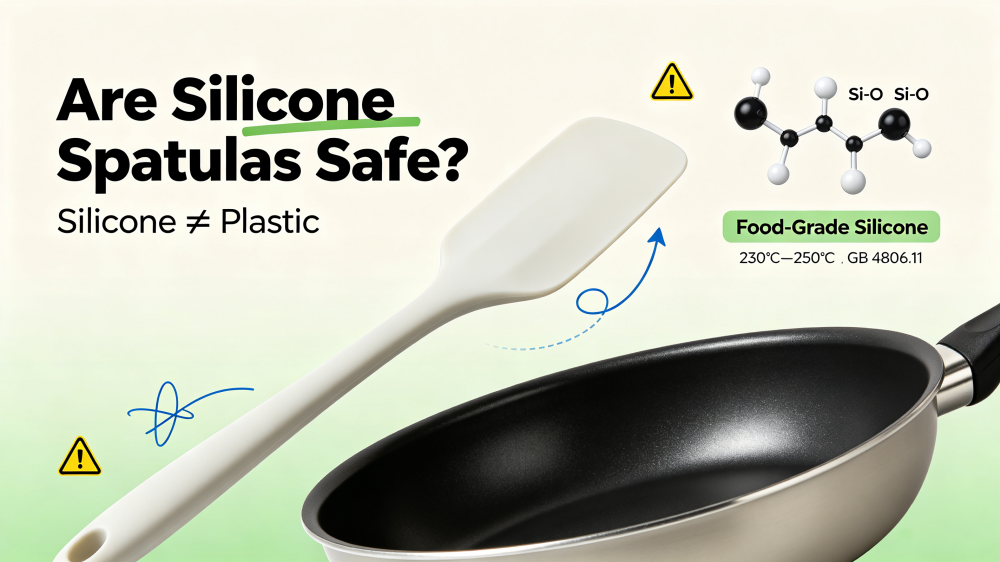
Silicone rubber, a non-crystalline high-activity adsorption material with the chemical formula mSiO₂·nH₂O, has emerged as a versatile eco-friendly elastomer across medical, cosmetic, infant, and kitchen sectors. Insoluble in water and most solvents, it features stable chemical properties and only reacts with strong alkali and hydrofluoric acid, distinguishing it from plastic, metal and traditional rubber materials. Its adjustable hardness, extreme temperature resistance, and non-toxic formula make it irreplaceable for food-contact products. This guide thoroughly sorts silicone’s classification standards, core physical performance, three mainstream molding technologies, production equipment, and finishes with a dedicated section on daily silicone kitchenware applications.
1. Core Classification of Silicone Raw Materials
Silicone can be categorized through three clear dimensions: raw material origin, physical form, and performance grade.
1.1 Classification by Raw Material Source
Two supply chains dominate global silicone production: domestic and imported raw materials.
Domestic silicone manufacturers include Dongyue, RuYing, Hongda, TianYu and JuHe, supplying cost-effective stock for mass consumer silicone goods. Imported high-purity silicone covers Japan Shin-Etsu, Toshiba, US Dow Corning, France Rhodia and Germany Wacker, widely adopted for medical, baby and high-end food-grade silicone products requiring premium transparency and tensile strength.
1.2 Classification by Physical State: Solid Silicone vs Liquid Silicone
Solid silicone (HTV/High-Temperature Vulcanized) is the most widely used base material for compression molding. Its hardness ranges from 30° to 80° Shore A, with mainstream grades between 40°–70°. Density sits at 1.1–1.12g/cm³, and standard elongation reaches 400%. It comes in milky white, light yellow or semi-transparent forms, suitable for silicone spatulas, baking mats, ice molds and daily silicone accessories.
Liquid silicone (LSR/Liquid Silicone Rubber) targets injection molding. It maintains soft flexibility at low hardness (10°–40° Shore A) and delivers ultra-high elongation of 600%–700%. Liquid silicone boasts crystal-clear transparency, outstanding tear resistance, and is primarily used for precision products such as baby nipples, silicone tubes and delicate baking molds.
1.3 Classification by Performance: Precipitated Silicone vs Fumed Silicone
Precipitated silicone (ordinary silicone) offers balanced cost and basic elasticity, applied to mid-range silicone keys, small industrial fittings and low-cost kitchen gadgets. Fumed silicone (pure silicone) features superior transparency and tensile performance with higher production costs, reserved for high-end heat-resistant silicone kitchenware, food-grade sealing rings and medical silicone parts.
2. Key Physical & Functional Properties of Silicone
Silicone’s multi-dimensional performance advantages lay its foundation for kitchen product substitution against ABS plastic, stainless steel and ordinary rubber:
- Extreme temperature tolerance: Continuous service at 150°C without performance decay, stable long-term use at 200°C for 10,000 hours, and short-time resistance to 350°C heat. It retains elasticity at -60°C to -70°C, far exceeding the -20°C threshold of conventional rubber. This trait makes silicone oven gloves, pot handles and baking mats safe for oven, air fryer and freezer use.
- Weather & ozone resistance: Silicone does not degrade under ultraviolet radiation or ozone exposure, avoiding aging and cracking after years of kitchen high-temperature steam contact.
- Food safety & chemical inertia: Non-toxic, odorless, free of BPA and plasticizers. No harmful substances migrate under high heat, fully compliant with global food contact standards including FDA, LFGB and China GB 4806.16.
- Adjustable functional customization: Manufacturers add fillers to produce conductive, heat-conductive, flame-retardant or antibacterial silicone variants. Flame-retardant silicone self-extinguishes without toxic smoke when burned, ideal for kitchen electrical sealing parts.
- High air permeability: Silicone film allows selective gas exchange, beneficial for fermenting silicone baking mats and food storage lids.
Hardness directly impacts processing and product texture: High-hardness silicone features high density, low shrinkage, stable weight and smooth touch but requires longer mixing cycles; low-hardness silicone flows easily during molding with higher shrinkage and lighter weight, suited for ultra-soft bakeware.
3. Three Mainstream Silicone Molding Manufacturing Processes
All silicone finished goods rely on three mature industrial forming technologies, each matching specific raw material types and product scenarios.
3.1 Compression Molding
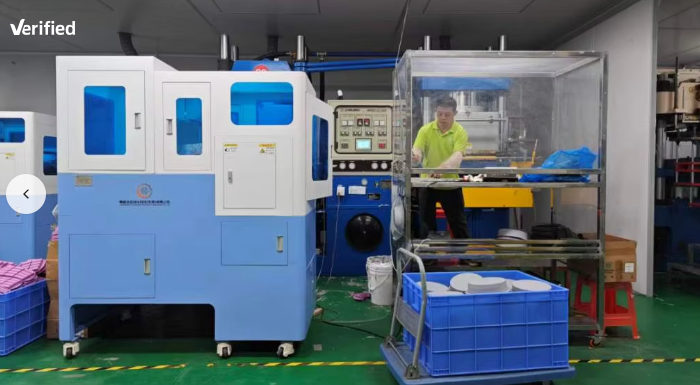
The most popular mass-production process for silicone kitchenware. Operators mix solid silicone raw stock with color paste matching Pantone color codes, place the compound into custom metal molds, then apply high pressure and 165°C mold temperature via hydraulic vulcanizing machines for primary vulcanization crosslinking. During curing, silicone molecules form stable three-dimensional network structures to lock the mold’s shape.
Post-processing includes secondary vulcanization at 200°C for 1–12 hours to eliminate peroxide volatile residues, improving food safety and durability. Compression molding produces silicone spatulas, cake molds, air fryer liners, pot coasters and silicone sealing gaskets. Core supporting equipment includes mixing mills, cutting machines, hydraulic vulcanizers, sandblasters and constant-temperature ovens.
3.2 Extrusion Molding
Extrusion machines squeeze solid silicone through fixed cross-section dies to form endless tubular, strip or sheet silicone, which can be cut to custom lengths post-production. The process limits complex irregular shapes but excels at silicone sealing strips, oven silicone tubes and baking mat edge strips, widely applied in kitchen appliance sealing components.
3.3 Liquid Silicone Injection Molding
Two-component liquid silicone is automatically mixed in precise ratios and injected into temperature-controlled precision molds under pressure for rapid low-temperature curing. It delivers ultra-smooth surface finishes and ultra-fine detail reproduction for intricate kitchen items such as mini chocolate molds, baby silicone food feeders and thin-walled steam baskets. The finished products have soft texture without flash edges, cutting manual trimming labor costs for high-volume premium silicone kitchenware production.
4. Silicone Kitchenware Real-Life Household Applications
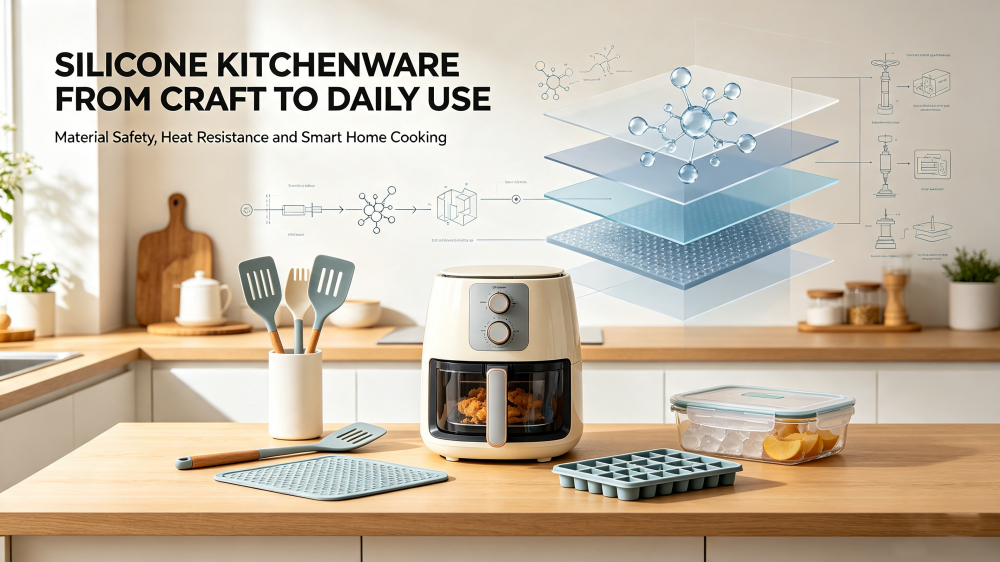
Food-grade silicone has become an indispensable daily kitchen material, covering nearly all cooking, baking and food storage links. Flexible silicone spatulas and pastry brushes prevent scratching non-stick pan coatings during stir-frying and baking, while high-temperature resistant oven mitts and trivets shield hands and countertops from scalds. Reusable silicone baking mats, muffin molds and air fryer liners replace disposable parchment paper, cutting household waste and simplifying cleanup with non-stick surfaces that rinse clean instantly. Foldable silicone steamers, ice cube trays and food storage lids maximize limited kitchen cabinet space through collapsible lightweight design. Silicone baby food molds and feeding mats deliver toxin-free meal preparation for infants, meeting strict food safety demands. Unlike plastic that warps at high heat or metal that conducts extreme heat, silicone balances safety, flexibility and durability, perfectly matching modern households’ pursuit of low-carbon, convenient and healthy cooking supplies amid the industry-wide shift away from volatile-cost metal and plastic raw materials.
Conclusion
Silicone’s diversified raw material grades, flexible molding technologies and superior comprehensive performance position it as a core substitute material for traditional kitchen supplies. Compression, extrusion and liquid injection molding each cater to different production volumes and product complexity, allowing manufacturers to customize hardness, color and functional additives for baking, cooking and food storage scenarios. As consumers raise standards for food safety and kitchen low-carbon upgrades, silicone kitchenware will maintain steady growth, driven by mature silicone processing craft and stable upstream silicon ore supply chains that avoid the drastic price swings plaguing copper, aluminum and petrochemical plastics.