If you enjoy cold beverages, craft cocktails, or elegant home entertaining, round ice balls will completely upgrade your experience. Unlike regular square ice cubes that melt quickly and water down drinks, spherical ice has the smallest surface area relative to its volume. It melts slowly, keeps drinks cold for hours, and brings a premium look to every glass. With a food-grade silicone ice ball mold, anyone can make flawless ice spheres at home in just four simple steps.
Step-by-Step Guide to Making Perfect Ice Balls
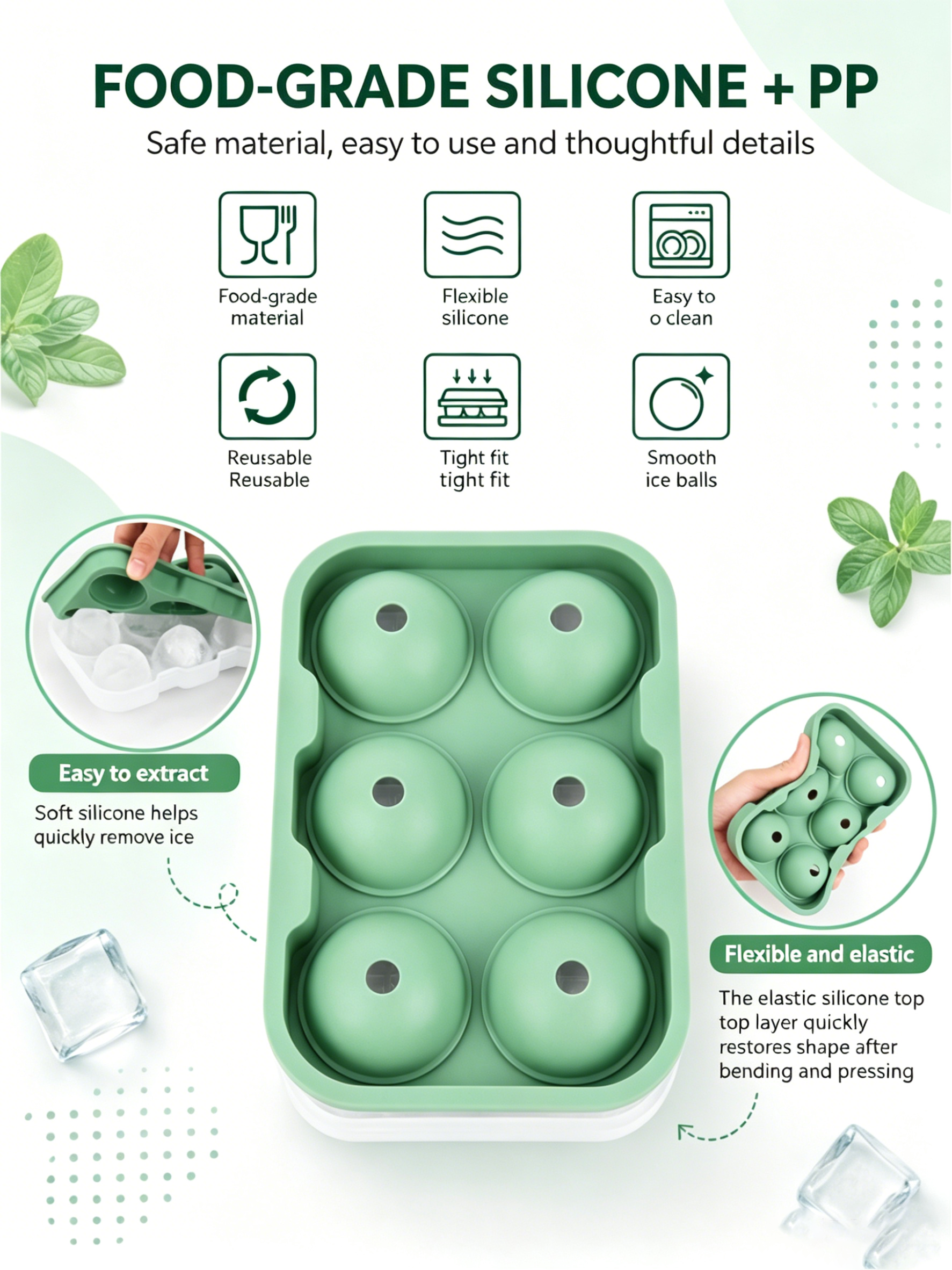
This 6-cavity silicone and PP plastic ice ball tray is designed for easy operation, with zero complicated procedures. Follow these four steps to get smooth, intact ice balls every time.
Step 1: Lock the upper and lower mold tightly
First, align the top silicone layer with the bottom plastic base. Press firmly around every edge to seal the two halves completely. A tight seal prevents water leakage and stops ice from forming uneven seams. Flexible food-grade silicone fits closely together, so you do not need extra clips to hold the mold shut. This tight closure ensures each ice ball forms into a smooth, seamless sphere without cracks or bulges.
Step 2: Pour water slowly through the filling holes
After locking the mold, use the small top openings to add water. For the clearest ice balls, use distilled or filtered water instead of regular tap water. Tap water contains air bubbles and mineral impurities that turn ice cloudy. Fill each cavity carefully; do not overfill. Leave a tiny gap to allow water to expand when it freezes, which avoids cracking the ice sphere or breaking the mold. The small funnel opening prevents spills and makes filling neat and mess-free.
Step 3: Freeze steadily in the refrigerator for 6–8 hours
Place the sealed mold flat and level on a freezer shelf. Keep it stable without tilting or shifting during freezing. The recommended freezing time is 6 to 8 hours. If you want ultra-clear ice, extend the freezing time to 10–12 hours for slow directional freezing, which pushes trapped air out of the ice. Do not take the mold out early; partially frozen ice will split when you try to remove it. The thick plastic base keeps the mold stable, so each sphere maintains a perfect round shape even after long freezing.
Step 4: Demold ice balls effortlessly
Once fully frozen, take the mold out of the freezer. Gently twist and squeeze the flexible silicone layer. Soft silicone releases ice easily without chipping or breaking the sphere. Unlike rigid plastic ice trays that require hot water to loosen ice, this silicone material lets you pop out each full round ice ball with just a light squeeze. After use, rinse the tray under running water or toss it into the dishwasher for quick cleaning. It is reusable, BPA-free, and safe for long-term daily use.
Wide-ranging Applications of Ice Balls in Daily Life
Ice balls are not only for bar drinks. Their slow-melting property makes them practical for dozens of household scenarios.
1. Upgrade Your Bar and Beverage Experience
This is the most popular use. Pour one large ice ball into a rocks glass for whiskey, bourbon, scotch, or brandy. The slow melting rate prevents dilution, so you can sip your spirit slowly without turning it watery. For iced cocktails, mojitos, gin tonics, and fruit punches, ice spheres keep drinks cold while preserving the original flavor. You can also freeze brewed coffee, milk tea, or fruit juice into ice balls. When these flavored ice spheres melt, they only add more taste instead of diluting your iced latte or fruit drink. For summer parties, round ice balls turn ordinary drinks into elegant bar-quality beverages that impress all guests.
2. Creative Homemade Desserts and Frozen Treats
The food-safe silicone mold works well for more than plain water. You can fill it with yogurt, fruit puree, chocolate syrup, or pudding to make spherical frozen desserts. Create round chocolate shells by pouring melted cocoa into the mold and freezing it. Once solid, pop out the hollow chocolate balls and fill them with ice cream, jam, or whipped cream. Kids will love these perfectly round homemade popsicles and jelly candies. The smooth silicone surface leaves no jagged edges, so every dessert has a neat spherical shape.
3. Food Storage and Outdoor Cooling
Ice balls stay frozen far longer than small ice cubes, making them ideal for coolers. Pack several ice spheres into your picnic bag, camping cooler, or lunch box. They keep sandwiches, fresh fruits, seafood, and beverages chilled for road trips and outdoor barbecues. Unlike small ice cubes that melt into a puddle quickly, these large spheres maintain low temperatures for hours without flooding your cooler. Fishermen and campers often use big ice balls to keep freshly caught fish and perishable food fresh for an entire day.
4. Household and Beauty Uses
For home use, frozen ice balls work great for facial massage. Roll a clean ice sphere gently over your skin to reduce puffiness, shrink pores, and soothe redness after sun exposure. You can also infuse water with green tea, aloe, or rose water before freezing to make skincare ice globes. In summer, place ice balls in pet water bowls to keep drinking water cool for cats and dogs for hours. They also slow down the growth of bacteria in standing water better than loose ice cubes.
Final Thoughts
A high-quality silicone ice ball mold turns the chore of making ice into a simple four-minute prep task. The slow-melting spherical ice improves drinks, elevates desserts, supports outdoor cooling, and even serves home beauty needs. Whether you are a home bartender, a busy parent, or someone who loves refined summer living, these perfectly round ice spheres bring small but noticeable upgrades to every part of daily life. With BPA-free silicone, easy cleaning, and consistent round results, this ice tray becomes an essential kitchen gadget year-round.