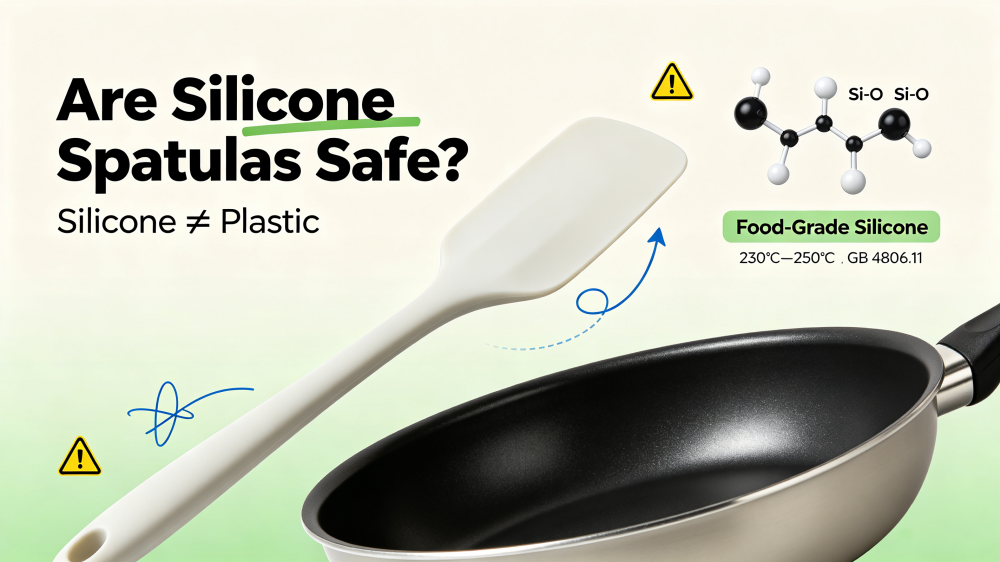
Correctly understand silicone kitchenware before you buy for a kitchen line or a foodservice program
When buyers search for Correctly understand silicone kitchenware, they are usually trying to answer a practical question: what is this tool really made to do, and where does it fit in a kitchen that has to perform every day? That matters more than it sounds. A spatula that looks soft and simple can affect nonstick pan life, cleaning time, serving speed, and even how a line cook handles delicate food. In sourcing terms, the difference between a decent utensil and a poorly chosen one shows up fast.
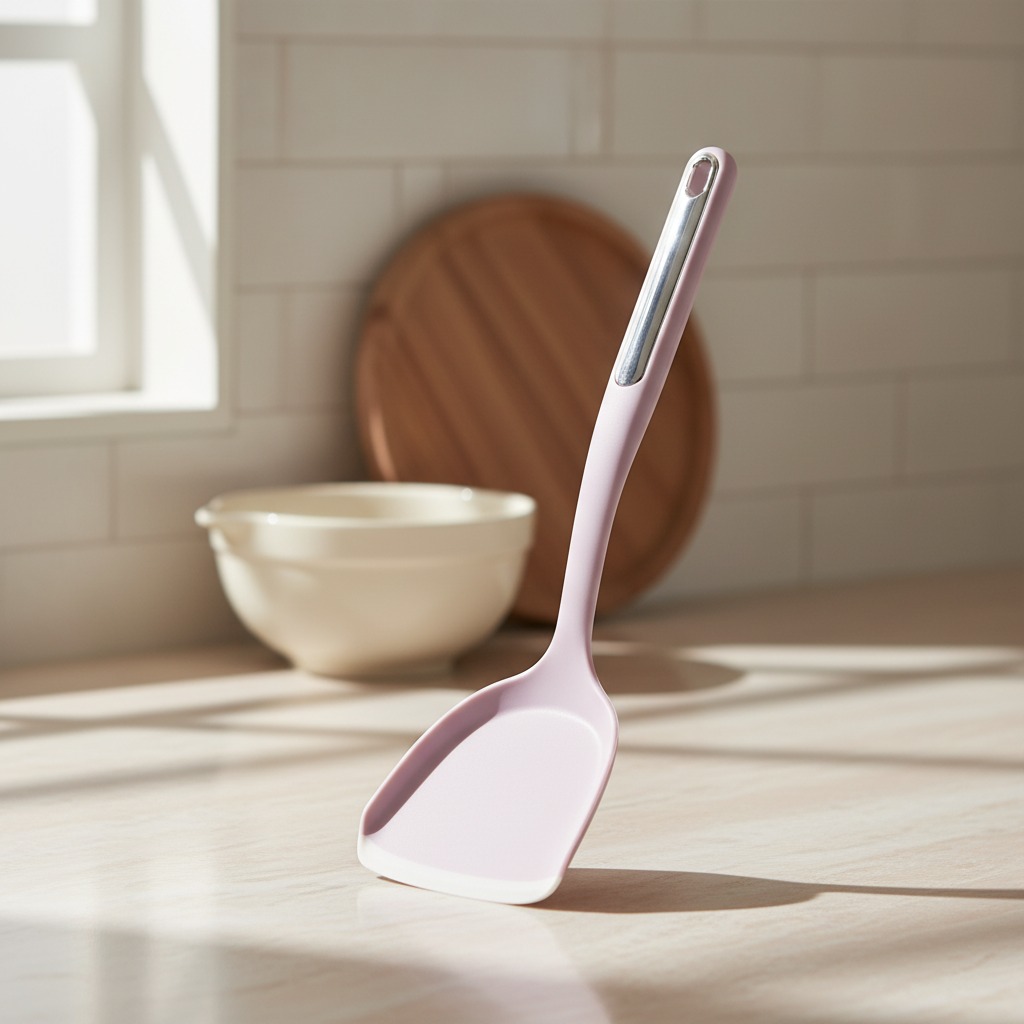
In this category, the visible product is a kitchen cooking utensil, specifically a spatula or turner used for stirring, lifting, scraping, and serving. The form is streamlined: a long handle, a broad shallow head, rounded edges, and a hanging hole near the end. Those details suggest a tool designed for everyday handling rather than specialty use. The visible surface looks like silicone or a silicone-coated body, though the exact material composition cannot be confirmed from the image alone. That caution matters. Many purchasing mistakes start with assuming a soft-looking utensil is automatically the right one for food contact, heat exposure, or repeated washing.
What buyers usually want from silicone kitchenware
The appeal is straightforward. Silicone kitchenware benefits often start with the way the material behaves around cookware surfaces. A soft edge can be kinder to nonstick pans than a hard nylon or metal utensil, and that is one reason these tools show up in home kitchens and commercial prep areas alike. The broad head also helps with lifting and scraping, especially when moving eggs, sautéed vegetables, or baked batter from a bowl. For a buyer, the real value is not the marketing language; it is whether the utensil reduces damage, improves control, and holds up under routine use.
Another attraction is cleanup. Easy clean kitchen tools save time, but “easy” should be understood in a manufacturing sense too. A one-piece-looking shape with fewer seams is usually easier to wash than a multipart handle-and-head assembly. The smoother the transition between handle and working end, the less likely food residue is to collect in corners. That said, appearance alone is not proof of hygienic design. Buyers still need to look at whether joints, inserts, or decorative strips create crevices that can trap grime.
Key features visible in this utensil type
This spatula-style utensil shows a few practical design cues that sourcing teams should notice. The head is wide and shallow, which supports scraping and turning rather than deep scooping. Rounded edges can be useful when working around coated pans or bowls. The hanging hole is a small detail, but in professional kitchens small details matter; a utensil that can be stored on a hook is easier to keep in rotation and less likely to vanish into a drawer.
The handle also include a lighter, metallic-looking insert or accent strip. That indicate a reinforced core or decorative construction. If a supplier claims a metal core, ask for clarification on how it is encased, how it affects balance, and whether it changes dishwasher or heat performance. In molded utensils, these internal choices can matter more than buyers expect.
Food grade silicone utensils: what to verify
Food grade silicone utensils are widely used, but the phrase is only meaningful if the supplier can support it with documentation. Buyers should ask what grade of silicone is used, whether the utensil is intended for direct food contact, and what testing or compliance evidence is available for the target market. Do not rely on color, softness, or a clean finish as proof. A purple utensil can look premium and still be the wrong spec for your application.
For product teams, the main technical checkpoints are simple: heat exposure range, compatibility with cookware surfaces, handle rigidity, and cleaning method. If the tool will be used in a foodservice environment, repeated washing and heavy use should be part of the conversation from the start. A utensil that feels fine in a showroom may behave very differently after weeks of contact with oil, detergent, and heat cycles.
How to judge silicone kitchenware benefits in a real buying decision
When comparing options, it helps to separate functional benefit from decorative finish. A matte-to-satin surface can feel good in hand and often looks tidy on display, but the real question is whether the grip remains comfortable when wet and whether the handle flexes too much under load. For a turner or spatula, the head shape should match the job. A broad head is good for lifting and scraping; a thinner, more flexible edge may suit delicate foods. If your operation uses a lot of coated pans, the margin for error is small.
There is also a storage angle. A hanging loop is convenient, but only if the hole is strong enough and the surrounding material does not tear or deform. That is one of those practical cautions that sounds minor until the utensil starts failing on a busy line. Likewise, a single-piece-looking design may be easier to clean, but buyers should confirm whether it is truly seamless or simply styled to look that way.
Common mistakes when evaluating silicone kitchenware
The first mistake is treating all soft utensils as interchangeable. They are not. Thickness, flexibility, head width, and core construction all change performance. The second is assuming that “easy clean” means maintenance-free. Food residues, stains, and odor retention depend on formulation and surface finish as much as on shape. The third is buying on color or appearance before checking whether the utensil will suit the pans, temperatures, and workflow in the actual kitchen.
Another common miss is overlooking the user. Home cooks and commercial crews do not use the same tool the same way. In foodservice, speed and durability often matter more than aesthetics. In retail or promotional programs, appearance and handling may carry more weight. Correctly understand silicone kitchenware by matching it to the operating environment, not just the catalog photo.
Quick buyer checklist
Before approving a spatula or similar utensil, ask for the material description, food-contact documentation, cleaning guidance, and the intended cookware compatibility. Confirm whether the product is molded, coated, or built with an internal insert. Check the head size against the intended task. And if the supplier is vague about the white edge, the handle insert, or the construction method, treat that as a signal to slow down, not a reason to guess.