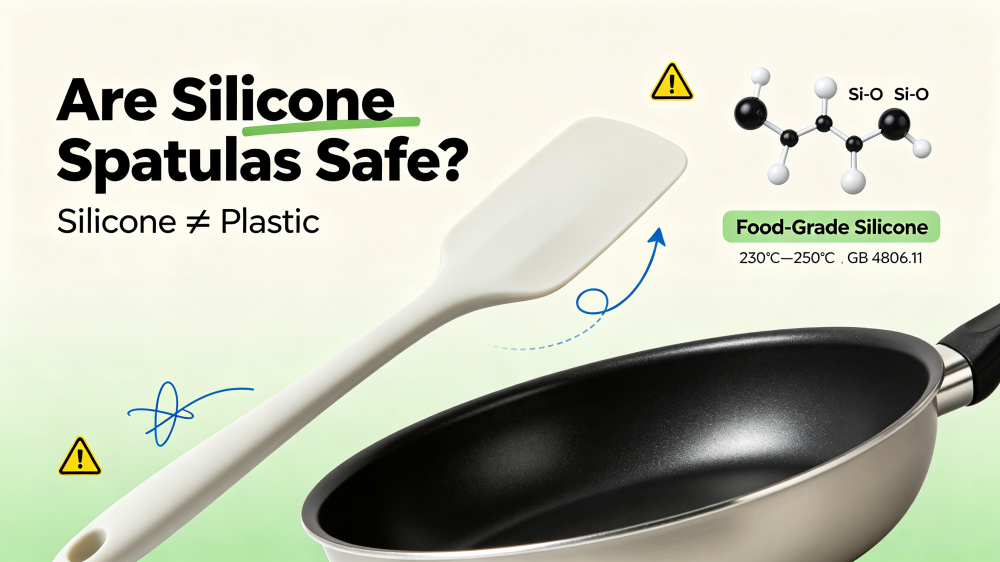
Many Home cooks who switch to non-stick cookware end up with a common concern: silicone spatula feel soft and bendable, and some people worry they are essentially “cooking with plastic” and ingesting micro-plastics while frying meals. This widespread misunderstanding comes from mixing up silicone and plastic at the molecular level.
Chemically Speaking, silicone is not plastic. Confusing silicone for plastic is comparable to mistaking diamond for ordinary glass. They belong entirely to different material families. This article breaks down the safety of silicone cooking utensils, explains unpleasant plastic‑like odors, identifies counterfeit silicone products.
Silicone and plastic are not the same species at all
To Understand safety risks, we first need to distinguish silicone from conventional plastic. Traditional plastic products are petroleum‑derived materials built on carbon‑carbon (C‑C) molecular chains. Common kitchen plastics including PP, PE and PVC all fall into this category. Under sustained high temperatures, many petroleum-based plastics soften, deform and release plasticisers and volatile compounds.
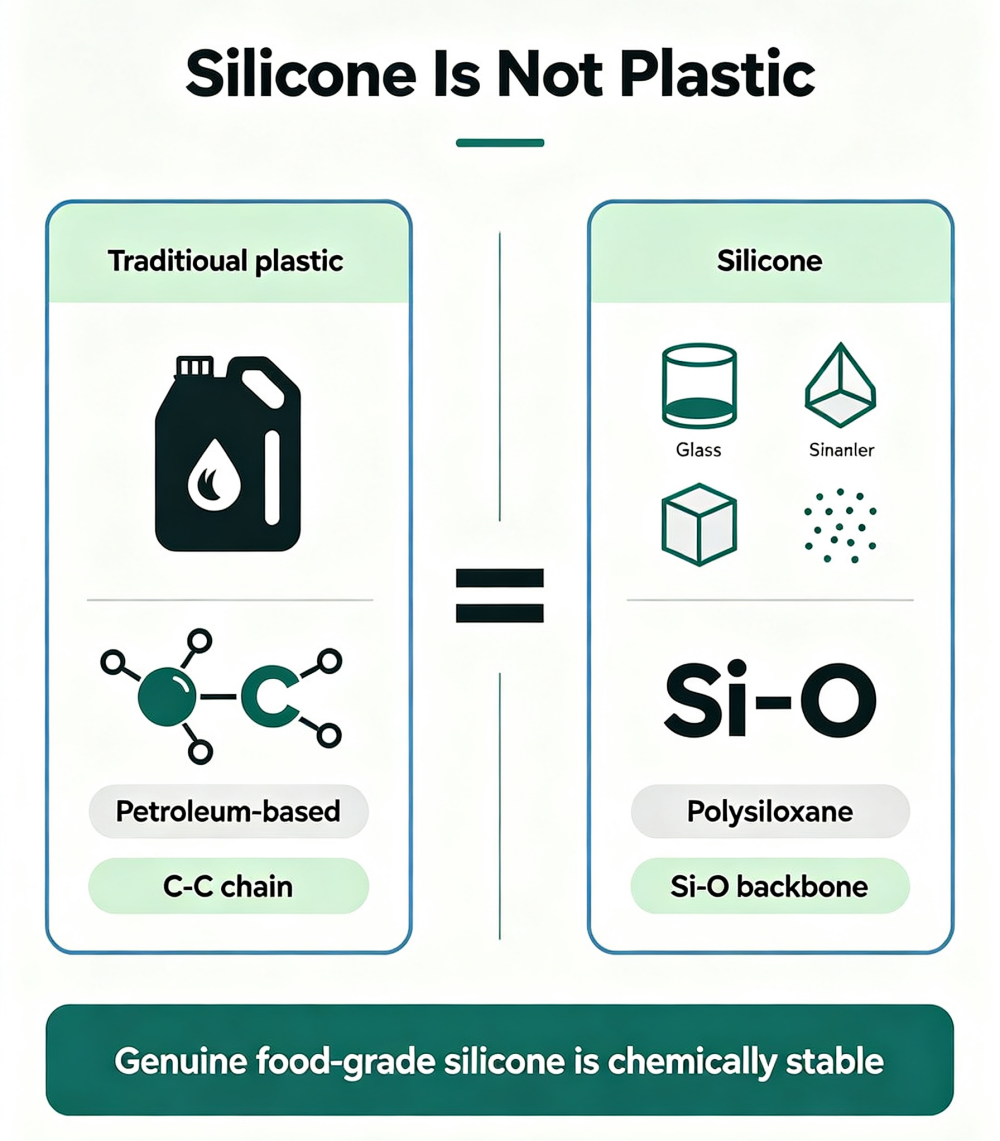
Silicone, by contrast, is scientifically named polysiloxane. Its backbone structure relies on silicon‑oxygen (Si‑O) bonds. This chemical framework links silicone to quartz, sand and glass rather than fossil‑fuel‑based plastics. This fundamental molecular difference defines its unique physical and chemical performance. High‑quality food‑grade silicone boasts excellent thermal stability, does not depend on plasticisers for flexibility, and resists breakdown under normal cooking heat.
Real food grade silicone, actually very stable
Genuine food‑grade silicone delivers reliable performance for daily kitchen tasks. Its typical working temperature range reaches 230°C to 250°C. Within this temperature window, it remains dimensionally stable, resists melting and hardly releases volatile substances. Another key safety feature is biological inertness: silicone molecules pass through the human digestive system without being absorbed. That means intact silicone fragments will not enter human metabolism under regular‑use conditions.
Nevertheless, many consumers report strong plastic-like smells when heating their silicone spatulas. Odd odors, sticky surfaces or partial melting are warning signs that you may not own pure food-grade silicone. Two major counterfeit scenarios frequently trouble the kitchen‑utensil market.
Why do some silicone shovels have a plastic smell?
The The first problem is filler‑adulterated silicone. To cut manufacturing costs, unethical manufacturers mix silicone with industrial‑grade fillers, low‑quality powder materials or use incomplete vulcanisation processes.
The The simplest home test to spot adulterated silicone is the fold test. Bend the silicone blade sharply with both hands. If obvious white marks appear along the folded crease, the product is highly likely to contain cheap industrial fillers. Adulterated silicone suffers greatly reduced heat resistance. When exposed to cooking heat, polymer chains degrade, producing volatile compounds that create that familiar “plastic smell”.
The The second hidden hazard lies in internal support frames inside silicone spatulas. Most silicone kitchen tools contain an internal rigid skeleton to maintain shape. Reputable brands apply food‑grade nylon or other high‑temperature‑resistant materials to this core component.
Unscrupulous Suppliers substitute recycled waste plastic for the inner frame. The Outer silicone layer may look perfectly fine, yet the hidden plastic core begins softening and decomposing above 150°C. Harmful volatile substances leak out during cooking without any visible clue for users. Even if the outer silicone meets food‑contact standards, the defective inner skeleton turns the whole utensil unsafe.
Don't challenge Chinese style stir fry with silicone
It is critical to separate theoretical heat resistance from real‑world Chinese stir‑frying conditions. Food‑grade silicone’s rated maximum temperature of 250°C represents laboratory test data, not permission for dry‑pot burning, deep‑frying or prolonged direct contact with super‑hot wok surfaces.
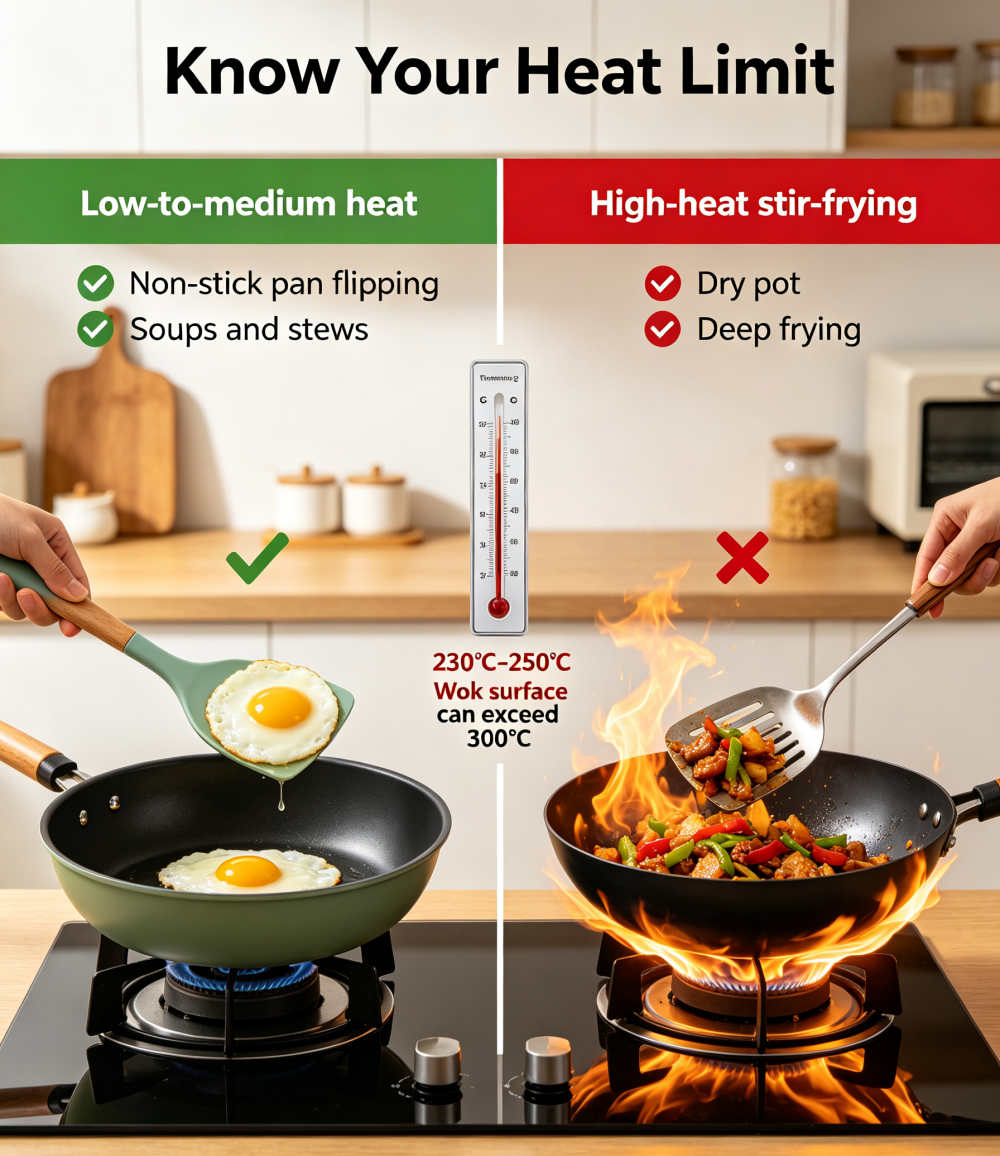
Authentic Chinese stir‑frying generates surface temperatures exceeding 300 °C on wok bottoms. Such extreme heat surpasses silicone’s practical tolerance threshold. Under excessive heat, silicone macromolecular chains break and accelerate material ageing. Continuous overheating shortens service life and raises the risk of substance release.
The True Correct Silicone Kitchenware Matching Method
Therefore, silicone spatulas should be matched to appropriate cooking scenarios. They shine for scrambling eggs, simmering soups, stewing dishes and flipping food in non‑stick pans. Their soft edges protect delicate non‑stick coatings from scratches, operate quietly and perform stably within moderate‑temperature cooking ranges.
However, Silicone tools are poor choices for high‑heat stir‑frying, dry‑pot cooking and deep‑frying. For these intense‑heat Chinese cooking styles, metal iron spatulas or solid wooden utensils remain more suitable options. Users should prepare multiple kitchen tools for different cooking tasks instead of relying on one universal spatula.
How to choose a truly reliable silicone shovel?
When Shopping for silicone kitchen utensils, follow practical selection criteria to avoid unsafe items. First, carry out the fold test: reject products that develop persistent white creases after sharp bending. Second, comply with official food‑contact material standards.
Look for China national standard GB 4806.11, the specification for food‑contact silicone rubber articles. International buyers may check FDA food‑contact certification from well-established brands, which confirms the product has passed safety evaluation for food‑touching applications. Avoid ultra‑cheap unknown‑brand silicone goods with no clear certification information.
Conclusion
Tag:Featured Blogs