Bakeware & Cake Tool for Flexible Portion Baking
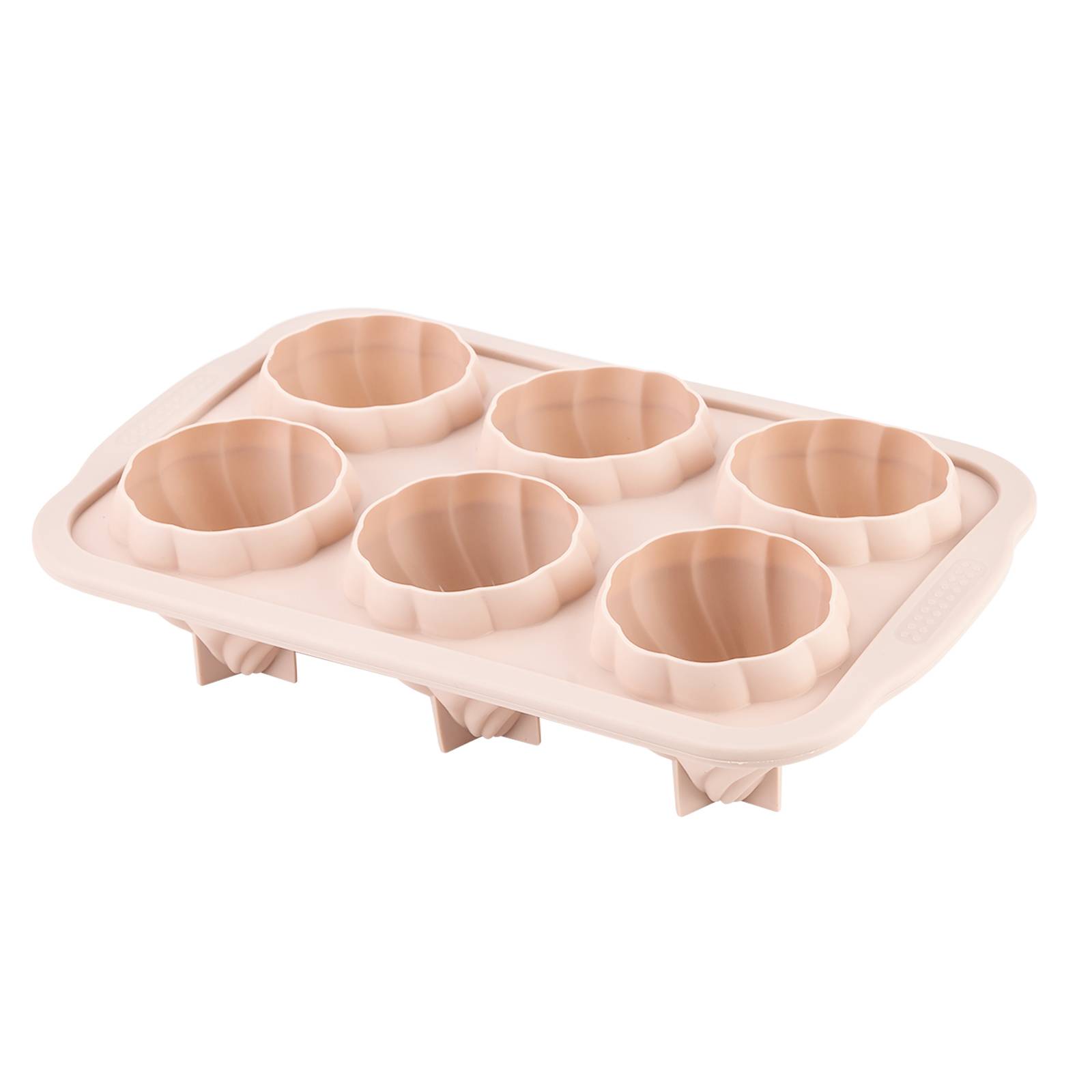
The Bakeware & Cake Tool shown here addresses a common production problem in modern baking: how to make individual cakes, desserts, or frozen portions with cleaner release and more stable handling. A six-cavity silicone mold with a reinforced rim gives bakers a compact way to portion batter or dessert mixtures while keeping the tray easier to move on a worktable or into the oven area. For home kitchens, small bakeries, and dessert brands, this style of mold supports the shift toward portion control, visual consistency, and efficient batch preparation.
Product Overview
This mold is built as a rectangular tray with six evenly spaced round cavities arranged in two rows of three. The cavity walls appear flexible and smooth, which is typical of silicone bakeware designed for easy release. Around the top edge, the mold has a rigid red reinforcement ring, often referred to in product listings as a cake mold with steel rim edge. That reinforced perimeter helps the tray keep its shape during filling, transport, and handling compared with a fully soft silicone mold.
The format suits small-format desserts where presentation and repeatability matter. Instead of baking one large cake and cutting it later, the user can produce six separate portions at one time. That approach reduces trimming waste and helps maintain consistent serving size, a trend that continues to grow in bakery prep and grab-and-go dessert packaging.
Key Structure and Practical Capabilities
Six individual cavities
The mold provides six separate forming spaces, which is useful for mini cakes, mousse, gelatin desserts, chocolate inserts, and chilled desserts. The cavities are shaped like shallow cups, making them suitable for mixtures that need to hold a defined form.
Flexible body with rigid top frame
The silicone body gives the product its release-friendly character, while the outer frame adds support. This combination is especially relevant in today’s bakeware market, where users want softer release surfaces without the instability that can come from thin silicone-only trays.
Compact tray geometry
The rectangular layout is easy to place on a shelf, baking rack, or prep table. It also makes batching more efficient in commercial and semi-commercial settings where space and workflow organization are important.
Materials and Finish Options
Based on the visible product information, the cavity surface is a white or translucent silicone molding surface with a smooth, nonstick-looking finish. The perimeter reinforcement is red and appears to be a metal frame or insert. Exact silicone type, steel grade, thickness, and food-contact certifications are not visible here, so those details should be confirmed during procurement.
In the broader bakeware category, buyers often compare surface finish as much as shape. A smoother cavity surface generally helps release and cleaning, while a stronger rim can improve usability in production environments. For private label buyers, finish options may also influence the look of a product line, especially when coordinating with kitchen brand color systems.
Manufacturing Process Trend
Silicone bakeware with a reinforced rim reflects a broader manufacturing trend: combining flexible molding surfaces with structural inserts to improve day-to-day handling. The process category likely involves silicone molding around a support frame, though the exact method is not visible. In current baking product development, this hybrid structure is popular because it balances release performance, durability, and tray stability.
For suppliers and brand owners, this design trend supports e-commerce packaging as well. Products that look stable and neat in photos often convert better than soft molds that appear difficult to carry or fill.
Application Scenarios
This Bakeware & Cake Tool can be used in a range of settings: home baking, bakery prep, dessert shops, catering kitchens, and frozen dessert production. It is suitable for cake batter, mousse, chocolate shells, gelatin, and portioned cold-set desserts. It may also fit small-batch product development for brands testing new individual dessert SKUs.
Because the cavities are separate, the mold is useful for portion standardization. That matters for cafés and bakeries that want consistent visual presentation without relying on manual cutting.
Quality Control Considerations
When evaluating this product, buyers should focus on visible structure, mold uniformity, and the fit between the silicone body and the reinforcement ring. The rim should sit evenly, and the cavities should look symmetrical so that each portion bakes or sets consistently. For commercial sourcing, buyers should also request confirmation of heat resistance, food-contact compliance, and packaging durability before placing volume orders.
Customization and Buyer Decision Factors
For OEM and ODM projects, customization may involve cavity shape, tray color, logo placement, packaging design, and frame appearance. Buyers should decide based on target market, intended dessert type, required portion size, and the level of rigidity needed during handling. If the product will be sold as a premium kitchen item, the reinforced-rim design can be positioned as a usability feature rather than only a visual detail.
When comparing options, it is worth asking whether the mold is intended mainly for baking, freezing, or multi-purpose dessert setting. That decision affects how the product is marketed and how customers will use it in practice.
Why This Format Fits Current Bakeware Trends
Today’s bakeware market is moving toward smaller portions, cleaner release surfaces, and tools that work across baking and chilled dessert categories. A six-cavity silicone mold with a steel-reinforced edge matches that direction well. It supports batch efficiency, improves handling stability, and meets the growing demand for compact dessert presentation.
Email: sharon@cngoldenview.com