Silicone Ice Cube Maker for Everyday Freezer Use
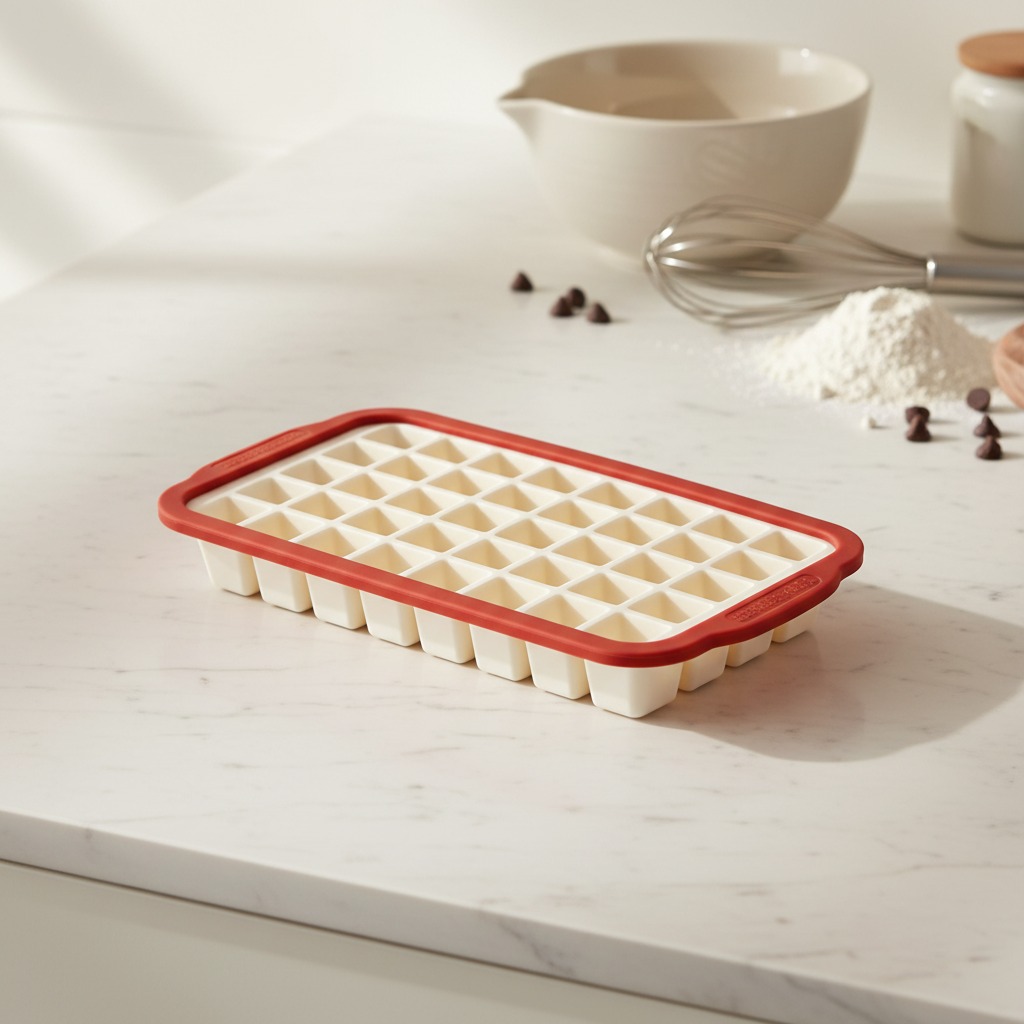
A silicone ice cube maker solves a simple but constant problem: how to make a steady supply of uniform ice without wasting freezer space or struggling to remove the cubes later. For households, cafés, bars, and private-label kitchen brands, this kind of tray is a practical tool for batch freezing water or other liquids in a compact format. The design shown here uses a rectangular body with a reinforced outer frame and a grid of square cavities, which supports organized freezing and easier handling during daily use.
Product Overview
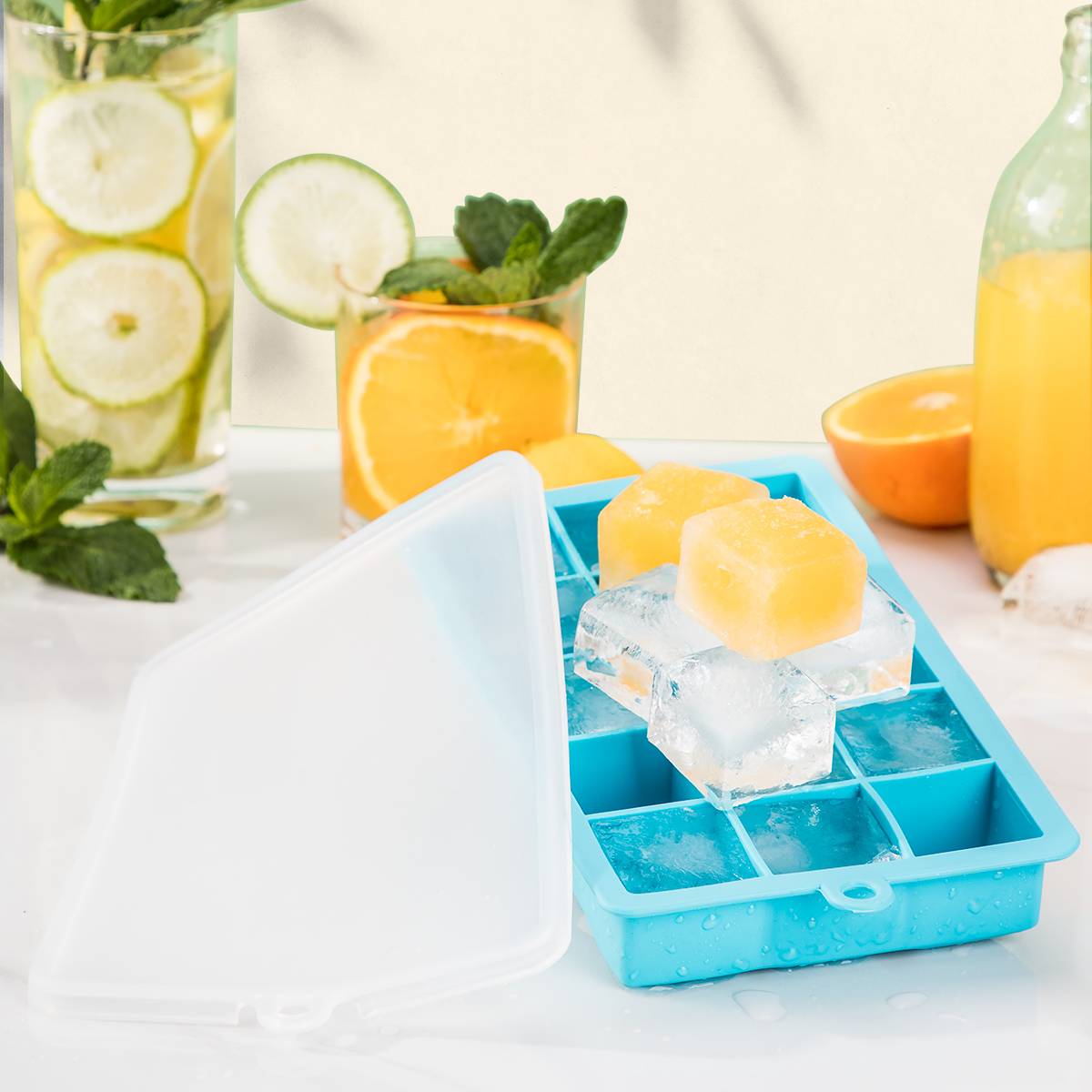
This ice mold is built as a multi-cavity tray for forming many small cubes at once. The visible structure includes straight cavity walls, rounded outer corners, and molded lip or tab areas at the edges for lifting and moving the tray. The white inner body and red perimeter frame suggest a two-tone kitchenware design, likely intended to improve visibility and handling in the freezer.
From a buyer’s perspective, the main value is efficiency. Instead of filling separate containers or handling large blocks of ice, the tray gives a repeatable cube shape that is easy to portion into drinks, coolers, or packaging workflows.
Key Specifications and Functional Features
Multi-cavity batch freezing
The grid layout allows multiple cubes to be produced in one cycle, which is useful when ice demand is regular. That matters in beverage service, where preparation speed often depends on having enough ready-to-use ice on hand.
Compact rectangular footprint
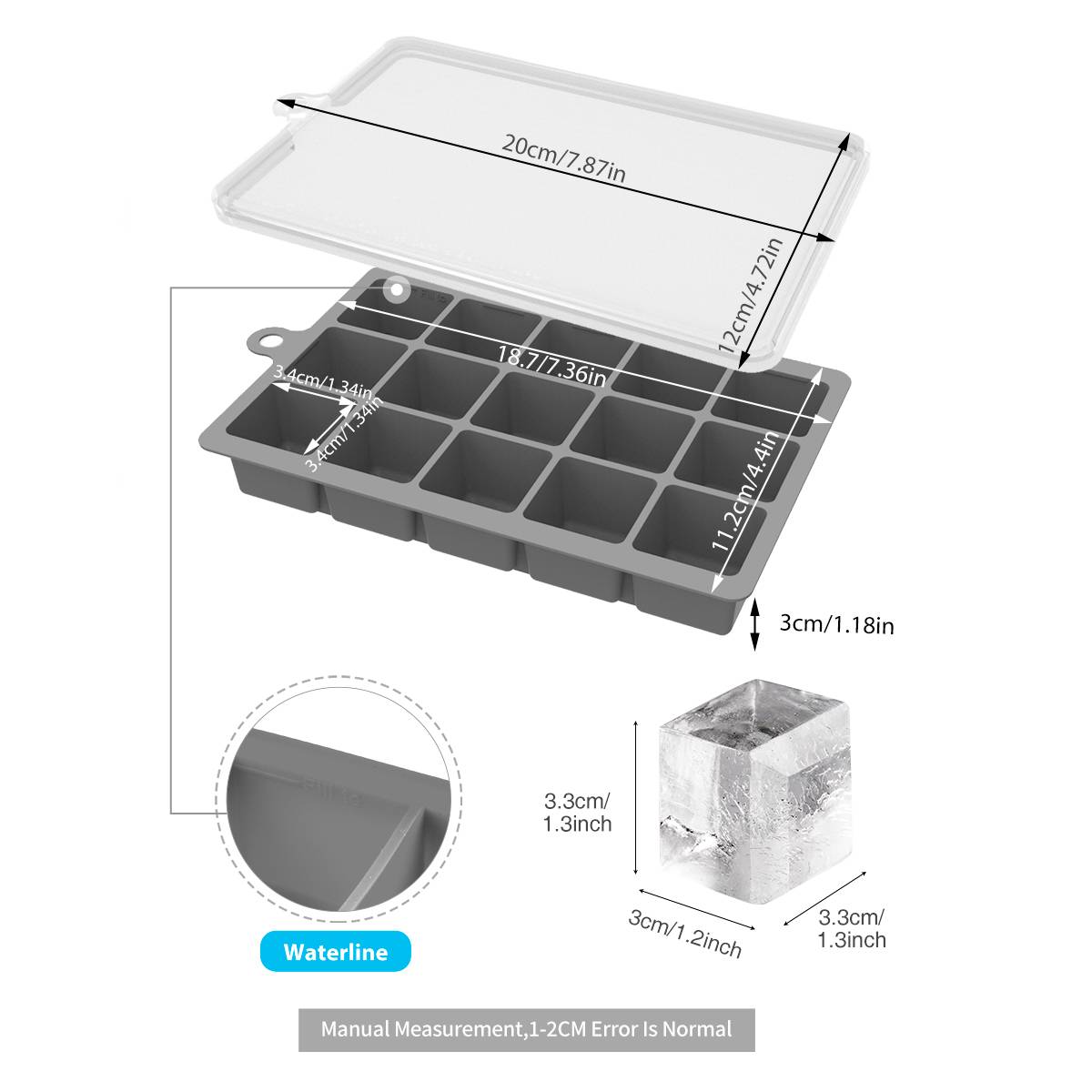
The tray is designed with a slim rectangular profile, making it easier to stack or arrange in domestic freezers and commercial cold storage. The shape also supports cleaner packing for retail or promotional kits.
Handling-friendly perimeter frame
The thicker outer frame appears to provide structure and a firmer grip point. In daily use, that can help users move the tray without bending the cavity area too much while it is filled.
Materials and Finish Options
As the picture shown, the product is made from silicone material. The matte finish reduces glare and gives the tray a practical kitchenware look rather than a decorative one.
For OEM and private-label projects, buyers usually evaluate several finish paths: softer flexible walls for demolding, firmer frames for stability, and color combinations that match brand identity. If you are sourcing from a silicone ice cube tray factory, our product's surface texture and edge stiffness have much more advantage.
Manufacturing and ODM Considerations
This type of product is commonly produced through mold-based manufacturing, and the exact route depends on the final material selection. Injection molding may be used for rigid or semi-rigid parts, while silicone molding is more typical for flexible tray structures. For a silicone ice cube tray ODM project, we can provide the mold geometry, cavity depth, and frame thickness cutomize service.
During the process of product design and development, small details matter: wall straightness, corner radius, tab size, and the alignment of the grid pattern. Those details must be confirmed before bulk production.
Application Scenarios
This flexible ice cube tray style fits several use cases. In home kitchens, it supports everyday drinks and meal prep. In bars and cafés, it helps staff build a consistent ice supply for beverages. In foodservice and promotional retail, the product can be packaged as a useful private-label accessory that is easy for customers to understand at a glance.
Because the cavity layout is compact and repetitive, it is also suitable for freezing small portions of juice, coffee, broth, herbs-in-water mixtures, or other liquid ingredients where portion control is helpful.
Quality Control and Buyer Decision Factors
When sourcing an easy release ice tray, buyers should look beyond appearance. Important checks include cavity consistency, frame rigidity, edge finishing, and how the tray sits on a flat surface. If the product is intended for repeated kitchen use, uniformity in molding is critical because irregular walls can cause uneven freezing or awkward cube removal.
Buyers should also confirm the exact material specification, food-contact requirements, color matching, packaging method, and whether the product must support retail branding. If you are comparing suppliers, ask whether the silicone ice mold can be adjusted for cube size, cavity count, or logo placement. Those choices often decide whether the item works as a general kitchen tool or as a branded market product.
Customization Guidance
For custom orders, the tray can often be adapted in frame color, cavity layout, outer dimensions, and packaging format. A silicone ice cube tray factory may also support logo embossing, custom inserts, or bundled retail presentation. If your target channel is e-commerce, clarity of shape and storage convenience should guide the final design. If the product is for hospitality use, durability and fast production consistency may matter more than decorative styling.
Talk with a Supplier
If you are developing a private-label kitchen item or comparing ODM options, start with the basics: material, mold structure, cavity dimensions, and intended use. Share your market requirements, then ask for samples or drawings before moving into mass production. A well-defined silicone ice cube maker project is easier to scale, easier to brand, and easier for end users to trust.